

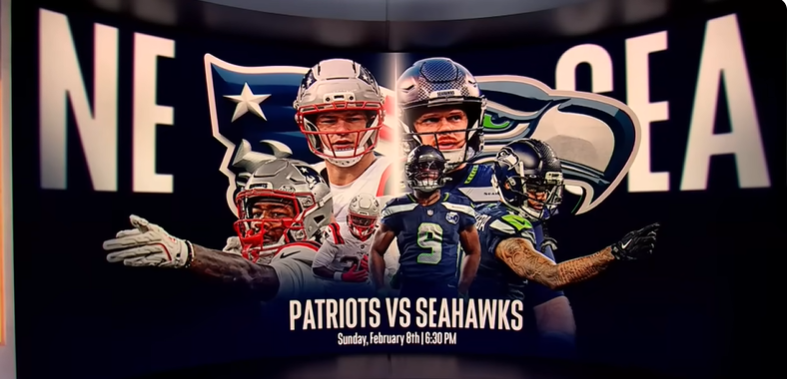
Courtesy: CBS Sports
Courtesy: CBS Sports
The NFL season reaches its climax on Feb. 8, 2026, when the New England Patriots and Seattle Seahawks meet at Allegiant Stadium in Las Vegas for Super Bowl LX, recharging a rivalry that has stood the test of time and shifting league landscapes. The matchup is a rare rematch between two franchises with distinct identities and a shared history on football’s biggest stage.
As the league’s most watched event approaches, anticipation is building around the layers of storylines that define this championship game and how it reflects both past legacy and present dynamics.
A rivalry renewed on a national stage
Super Bowl LX represents a return to prominence for both the Patriots and Seahawks, who last faced each other in a Super Bowl several seasons earlier. That earlier meeting left a lasting imprint on the NFL, remembered for dramatic swings and signature moments that shaped the legacy of both franchises. This time, the rematch in Las Vegas feels more nuanced, blending history with a fresh competitive context.
Allegiant Stadium, known for its modern architecture and capacity to host major sporting events, sets the stage for this championship showdown. The location and timing underscore how the NFL has expanded the Super Bowl experience into a global cultural spectacle that goes beyond gridiron action.
How the Patriots carved their path
The Patriots’ journey to Super Bowl LX has been marked by consistency and adaptation. Under the leadership of coach Mike Vrabel, New England built a postseason run grounded in discipline and balance. Their strategy emphasized defensive control and situational offense, hallmarks of a team steeped in both experience and evolution.
New England’s playoff performance showcased the ability to manage key moments and pressure situations. With each step through the bracket, the Patriots demonstrated a refined approach that blended physical toughness with strategic adjustment, carrying them forward as legitimate contenders for the league title.
Seattle’s resurgence and strategy
For the Seahawks, reaching Super Bowl LX underscores a resurgence driven by identity and execution. Seattle’s defense played an influential role during crucial games, while the offense balanced tempo and precision. Their path to the Super Bowl was defined by adaptation, with adjustments tailored to overcome distinct challenges in each playoff round.
The Seahawks’ performance highlighted their commitment to a defense-first mentality backed by an offense capable of striking when opportunities emerged. This combination elevated Seattle as a formidable opponent capable of challenging a Patriots team built on its own tradition of postseason excellence.
Rematch with new meaning
While historical context binds these two franchises, the stakes in Super Bowl LX are shaped by contemporary influences. The NFL in 2026 looks different than it did during their last championship meeting, with evolving offensive schemes, broader global attention and a cultural moment that has amplified the league’s reach.
Coaching contrast plays into the narrative as well. The strategic approaches of both sides will likely define pivotal moments, making play-calling and adjustments key talking points leading up to the game.
Beyond football: the broader Super Bowl impact
Super Bowl LX carries cultural significance that extends beyond the field. As part of the NFL’s yearly showcase, the championship event commands global viewership, entertainment programming and community engagement tied to both the game and its ancillary events. The halftime show, fan activations and media attention solidify the Super Bowl as a centerpiece of sports culture.
The Patriots-Seahawks rematch, anchored by a date and venue that will be etched into NFL lore, adds depth to that narrative. The matchup offers something for longtime football fans while attracting new viewers drawn to the spectacle, the stories and the championship stakes.
With kickoff set for Feb. 8 at Allegiant Stadium in Las Vegas, Super Bowl LX promises to deliver a compelling chapter in a rivalry that continues to shape the NFL’s evolving history.
Source: USA TODAY
About the Author






1 thought on “Super bowl LX delivers intense Patriots-Seahawks rematch”