Courtesy:kelly-sikkema from unsplash
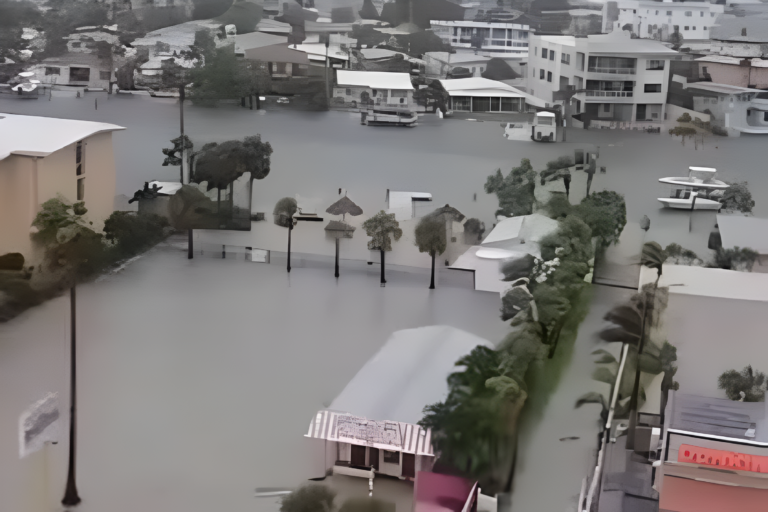
In nearly 20 years of living in North Kīhei, Tova Callender has watched floodwaters rush through her neighborhood after heavy rains Upcountry. Children floating past on stand-up paddleboards after big storms was something she had grown used to. But what happened after the Kona low storm that hammered Maui last weekend was something different entirely — mud beyond people’s knees in parking lots, streets buried under more than 2 feet of thick sediment, and a condo complex damaged by a previous storm that finally collapsed under the pressure.
The scale of what South Maui experienced during the March 13 and 14 storm is forcing a reckoning with a problem that experts say has been building for generations and will take just as long to fix.
What happened and how bad it got
The numbers from last weekend’s Kona low are difficult to absorb. Nearly 50 inches of rain just over 4 feet fell over three days at the summit of Haleakalā and parts of Kula. That water rushed down more than 10,000 feet of mountain through increasingly channelized streams and gulches, overwhelming a system of culverts and ditches that was never designed to handle that kind of volume. By the time it reached South Maui’s low-lying coastal floodplains, it was carrying enormous quantities of sediment and debris with it.
Portions of South Kīhei Road, including the area fronting Kama’ole Beach Park II, crumbled entirely. Streets filled with floodwaters. Cleanup crews worked for days to remove mud that had piled more than 2 feet deep in some areas. The Waiakoa bridge, where some of the worst flooding concentrates, was overwhelmed by sediment and debris despite earlier efforts to create a clearer drainage path through nearby sand dunes.
Why it keeps getting worse
Callender, who serves as the Maui coordinator for the Hawaii Department of Land and Natural Resources’ Ridge to Reef initiative, believes a dangerous combination of three forces is making each storm worse than the last. Drought, wildfires, and deer have stripped the hillsides above South Maui of the vegetation that once helped absorb rainfall before it became runoff. Without that natural buffer, water that might once have soaked gradually into the landscape now races downhill carrying everything in its path.
University of Hawaii Sea Grant coastal specialist Tara Owens adds another layer to the problem. South Maui was built over the extensive wetlands that once served as the area’s natural flood management system. Those wetlands absorbed and filtered runoff before it reached the coast. When they were filled and developed, that capacity disappeared, and no amount of infrastructure has been able to replace it. Climate change is compounding the problem further, driving the pattern of intense drought followed by extreme rainfall that produces what Owens describes as precipitation whiplash conditions that overwhelm landscapes and infrastructure simultaneously.
Why the solution has to start at the top of the mountain
Maui County Public Works Director Jordan Molina was direct about the limits of what infrastructure alone can accomplish. The county is working to implement the Kīhei Drainage Master Plan finalized in 2022, including engineering studies, sediment removal in key gulches, and exploration of mauka-side drainage basin locations. But he acknowledged that even with significant improvements, low-lying floodplain areas will continue to experience flooding during major storms. Building infrastructure capable of eliminating that flooding entirely would require a system so large and costly it is simply not financially feasible.
Callender and other conservation experts argue that the real solution has to begin much higher up the mountain and work its way down through what she calls a treatment train — a series of interconnected interventions at every elevation level. The approach includes 3 interconnected priorities that experts say must work together.
The first is vegetation restoration. Invasive trees that disrupt the hydrology of Upcountry areas need to be removed and replaced with native species that allow water to sink back into the landscape. The second is deer control. Fencing to keep deer from destroying critical vegetation is an ongoing and essential effort at all elevation levels. The third is wetland restoration. Closer to the coast, restoring and protecting remaining wetlands would help capture runoff before it reaches developed areas, cleaning and filtering water on its way to the ocean.
A generational problem with no quick fix
Maui County Council Member Tom Cook, who holds the Kīhei residency seat, points to stormwater detention basins Upcountry as the most practical near-term solution, noting that they would allow runoff to be captured and released slowly rather than all at once. However, a state law passed after a 2006 dam failure on Kauai that killed seven people creates significant liability challenges for detention basin projects. A bill proposed this session to ease some of those restrictions died in committee, though lawmakers plan to reintroduce it next year.
For residents like Callender who have watched the problem grow worse with each passing storm season, the timeline for meaningful change is sobering. The damage to South Maui’s landscape, she says, is generations in the making. Fixing it will take just as long.
Source: Maui Now / Hawai’i Journalism Initiative
About the Author