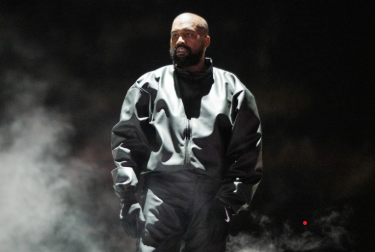
Courtesy: KanyeWest

Italy has taken the rare step of banning 2 of music’s most high-profile artists from performing within its borders. Italian authorities blocked Kanye West and Travis Scott from staging concerts in the country. Officials cited serious security concerns as the reason. The Italy bans Kanye West Travis Scott 2026 decision marks a significant moment in the global conversation about artist accountability and public safety. It also raises urgent questions about what governments can and should do when large-scale events pose serious risks.
What the ban means for both artists
The decision covers any planned or future performances by either artist on Italian soil. Authorities did not frame it as temporary. They did not attach conditions for lifting it either. Instead, they made a firm assessment that the security risks tied to events featuring either artist are simply too high to allow.
For West, the ban adds yet another layer to an already turbulent period. His public behavior, social media activity and a long series of controversies have made him increasingly difficult for venues, promoters and now governments to accommodate. Furthermore, his recent public clash with Jay-Z has kept him at the center of hip-hop’s most watched ongoing dispute. Against that backdrop, Italy’s decision lands as one more real-world consequence of a public profile that grows more combustible by the month.
For Scott, the ban carries its own heavy history. The Astroworld tragedy in November 2021 killed 10 people during a crowd surge at his Houston festival. That event permanently changed how authorities around the world assess the risk tied to his concerts. Since then, venues and promoters in multiple countries have approached his shows with heightened caution. Italy moved that caution all the way to an outright ban. That is a meaningful escalation.
Why security concerns drove government action
Italian authorities take public safety at large gatherings seriously. When officials determine that the risks of a particular event exceed what organizers can safely manage, they have the authority to act. In this case, they exercised that authority fully.
Both West and Scott bring complicated histories to any venue that books them. They also attract enormous crowds. Together, those factors create a security calculation that Italian officials decided falls outside acceptable limits. Moreover, the potential consequences of a serious incident on Italian soil almost certainly weighed heavily in the final decision. No government wants to explain why it allowed an event to proceed after warning signs were already visible.
What this means for the live music industry
Italy’s decision signals something important to the broader touring world. Artist behavior and event safety records now directly affect whether a performer can work in a given country. That is a shift. Governments are no longer leaving all risk management to venues and promoters. Some are now making those calls at a national level.
For other artists with troubled public profiles or event safety histories, this move may serve as a warning. Other governments watching closely could feel encouraged to act similarly if they judge the risk high enough. In short, Italy may not be the last country to go this route.
For West and Scott specifically, the ban closes off one of Europe’s most important concert markets. Italy draws major touring acts to Rome, Milan and Florence every year. Losing access to that market is a concrete professional consequence. It is not symbolic. It costs money and reach in a region where both artists have large and loyal fan bases.
Neither artist had publicly responded to the ban at the time of publication.
Source: Moneycontrol
About the Author