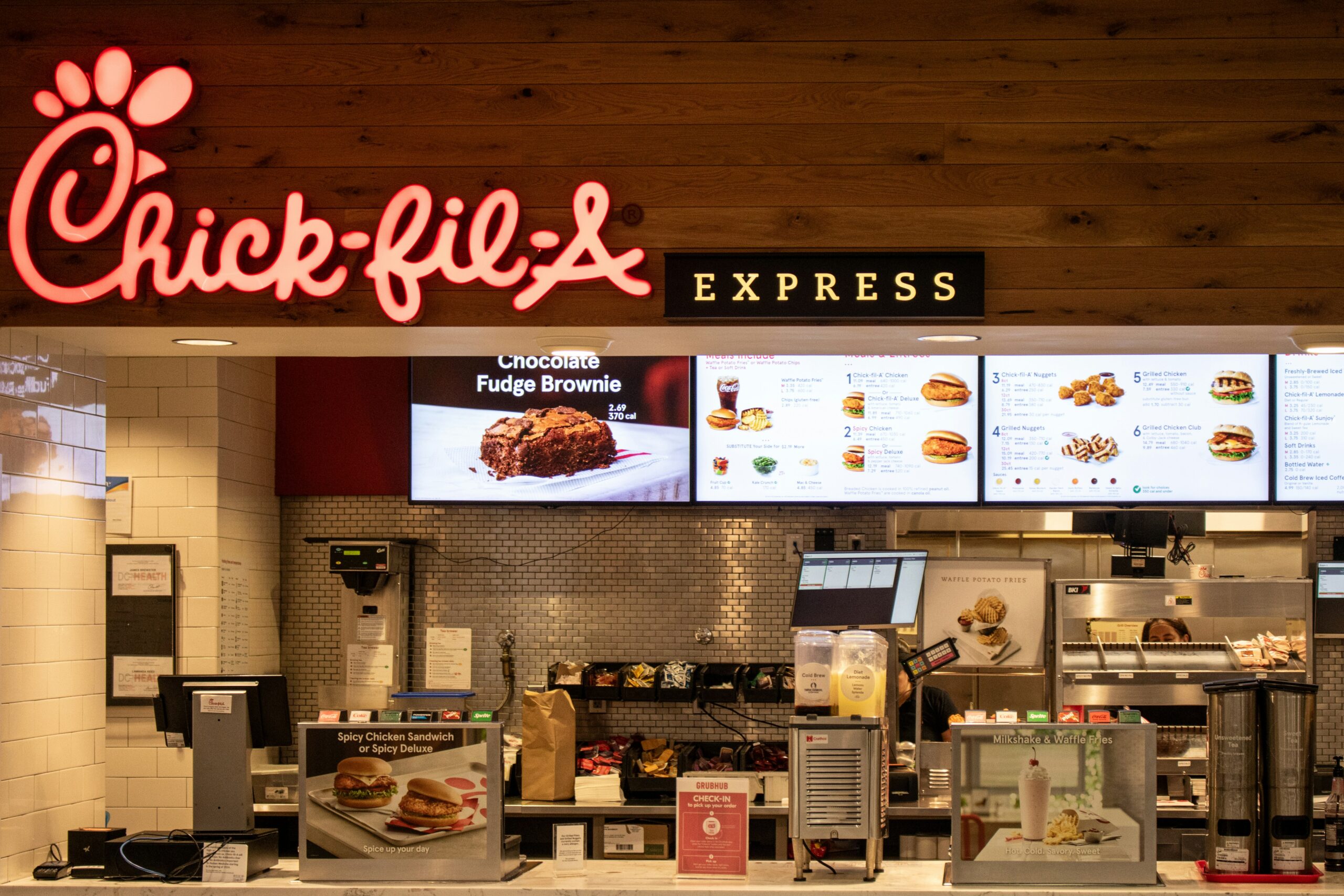
Photo by Zoshua Colah on Unsplash
Chick-fil-A has looked nearly indestructible in the fast-food industry. For over a decade, the chicken chain sat at the top of a closely watched customer satisfaction ranking. It built one of the strongest reputations in the industry through speed, service and loyalty. That streak is now over.
The latest American Customer Satisfaction Index survey revealed a new leader. Diners rewarded freshness, variety and value at a time when restaurant customers have become harder to impress. Chick-fil-A still leads the chicken category, however, and remains one of the most powerful names in quick service. The bigger story is what finally changed around it.
What the new ranking revealed about Chick-fil-A
Chick-fil-A’s 11-year hold on the top fast-food spot finally broke in the latest ACSI restaurant report. According to the ACSI, Jersey Mike’s outpaced the chicken chain after 16,464 customers shared their recent restaurant experiences. Reviewers praised the sandwich chain for freshness, menu variety and value. Those three areas have become increasingly important as diners push back against higher restaurant prices.
Nevertheless, Chick-fil-A remained the clear leader within the chicken category. It stayed ahead of KFC, Raising Cane’s, Wingstop and Popeyes. Jersey Mike’s, meanwhile, arrived at the top with serious growth behind it. The chain added 238 new locations in 2025, reaching $4.2 billion in systemwide sales. That growth demonstrates the chain’s ability to expand quickly without sacrificing the quality perception that has kept customers loyal.
Jersey Mike’s CEO Charlie Morrison addressed the win in a LinkedIn post. He credited the hard work and dedication of franchise owners and team members for delivering what he called “A Sub Above” every day. He added that he felt honored to be part of a team that cares deeply about the guest experience.
How the rest of the fast-food rankings shook out
The broader ACSI rankings showed just how competitive the category has become. Jimmy John’s and Panda Express tied near the top. KFC, Papa John’s and Domino’s also ranked highly. Raising Cane’s, Starbucks and Subway followed closely behind, while Burger King, Dunkin’ and Little Caesars rounded out the list.
In category-specific rankings, Jersey Mike’s led sandwiches, Papa John’s led pizza, Burger King led burgers and Texas Roadhouse topped full-service restaurants.
What sets Chick-fil-A apart despite losing the crown
Chick-fil-A has operated as a high-volume service machine for years. The chain avoided relying on a sprawling product lineup. Instead, it focused on chicken, consistency, speed and unusually strong hospitality. According to QSR Magazine, traditional domestic freestanding or drive-thru-only Chick-fil-A restaurants generated median annual sales of about $9.09 million in 2025. That figure underscores tremendous productivity at the store level.
Restaurant Dive has also reported that Chick-fil-A leads in drive-thru satisfaction, even with longer lines, because it moves cars through more efficiently than competitors. Another major edge comes from its owner-operator model. Chick-fil-A operators stay closer to daily restaurant execution, which helps protect service quality as the chain continues to grow. That combination of focus, throughput and hospitality remains the chain’s real competitive moat.
Chick-fil-A’s systemwide sales reached $23.9 billion in 2025, up from $22.7 billion in 2024 and $21.6 billion in 2023. The chain added a net 179 franchised and company-operated stores in 2025, reaching 2,863 outlets, excluding licensed units. It led the 2025 chicken-chain ranking category with $22.7 billion in 2024 sales, far ahead of Popeyes at $5.7 billion and Raising Cane’s at $5 billion. Sales have grown roughly 3.5 times over the past decade, climbing from approximately $6.83 billion in 2015, according to Business Insider. In the 2026 ACSI restaurant study, Chick-fil-A lost the overall quick-service crown to Jersey Mike’s but kept its position as chicken-category leader with a score of 83.
Why rising prices are reshaping the fast-food race
The restaurant industry is no longer growing primarily through traffic. According to ACSI, chain restaurant sales rose 3% in 2025. That growth trailed the 3.8% menu-price inflation rate, suggesting higher prices drove more of the gain than stronger demand. Furthermore, the ACSI noted that quick-service restaurants now face real traffic pressure as customers question whether the experience justifies the price.
That pressure also shows up in broader inflation data. According to the Bureau of Labor Statistics, food-away-from-home prices rose 3.5% over the 12 months through May 2026. Full-service meals climbed 3.8%, while limited-service meals rose 3.3%. The National Restaurant Association reported that menu prices rose 0.3% in May and 3.5% year over year, even as grocery prices increased by only 2.7%.
Moreover, McKinsey has found that value and pricing remain central to consumer decision-making, as inflation and economic uncertainty force diners to reconsider every restaurant visit. Jersey Mike’s win, then, is not simply about sandwiches beating chicken. It demonstrates that customers are rewarding chains that make higher prices feel genuinely worth paying.
Source: TheStreet
About the Author