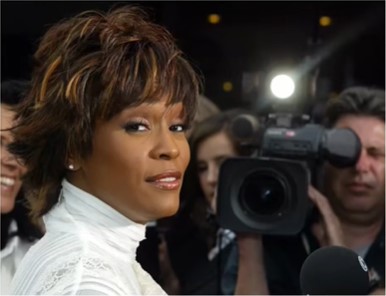
Courtesy: The Breakfast Club (Youtube)
Whitney Houston’s estate hits back hard after Oprah shares controversial stage fall story
A story Oprah Winfrey shared while accepting an award in France has sparked serious backlash from those closest to Whitney Houston’s legacy. Pat Houston, Whitney’s former manager and sister-in-law who currently controls the late singer’s estate, issued a firm public statement after Oprah’s remarks spread widely across social media.
The controversy started when Oprah, while receiving the Ken’s Lion Heart Award at a ceremony in France, told an audience about a moment from what she described as one of Whitney’s final appearances on her show. According to Oprah, Whitney had returned to drug use by the time she came to perform. She fell off the stage in front of a live studio audience. Oprah then personally intervened to persuade audience members with cameras not to share footage of the incident. Her stated reason was protecting Whitney from public destruction.
The estate’s response was swift and direct
Pat Houston did not let the account go unchallenged. In a statement to TMZ, she confirmed that Whitney did fall at some point connected to the show. However, she pushed back firmly on the characterization of the circumstances. The fall occurred during a sound check, not the live performance itself. Darkness in an unfamiliar stage area caused the incident, not substance use. Houston was emphatic on one point: Whitney was not high.
Her statement went further than simply correcting the facts. Houston addressed the broader pattern of attaching Whitney’s personal struggles to every chapter of her professional life, calling it inaccurate and unfair. What the studio audience witnessed during the actual performance was the product of discipline, talent and commitment. She closed by stating that Whitney’s legacy deserves the dignity of truth, not the repetition of myths.
The Breakfast Club weighs in on Oprah’s decision to speak
Hosts on The Breakfast Club were vocal in their reaction. The central question they kept returning to was not simply whether Whitney was or was not high on that particular day. Rather, it was about why Oprah chose to tell the story publicly at all after years of keeping it private.
The hosts pointed to a clear contradiction at the heart of Oprah’s account. Intervening at the time was meant to protect Whitney from public harm. Telling that same story years later in a high-profile setting works directly against that original intention. A promise to protect someone’s legacy, they argued, should not expire simply because that person is no longer alive.
Another concern also emerged from the discussion. By sharing the story publicly, Oprah may have inadvertently signaled to audience members who were present that day that the information is now fair game. Photos and footage that were once suppressed at Oprah’s personal request could now circulate freely. That outcome would cause the exact damage Oprah once worked hard to prevent.
A legacy that still commands fierce protection
The intensity of this reaction reflects how deeply Whitney Houston’s legacy resonates with fans and those who knew her. Her artistry, her voice and her humanity remain subjects of genuine devotion. Those closest to her estate continue fighting to ensure her story is told with the full complexity and dignity she deserves. Reducing her life to a single moment or a single narrative is something they will not accept quietly.
The Breakfast Club hosts landed on a simple but powerful conclusion. Regardless of what anyone believes about that day, a commitment to protect someone should not end when they are no longer here to speak for themselves.
Source: The Breakfast Club
About the Author