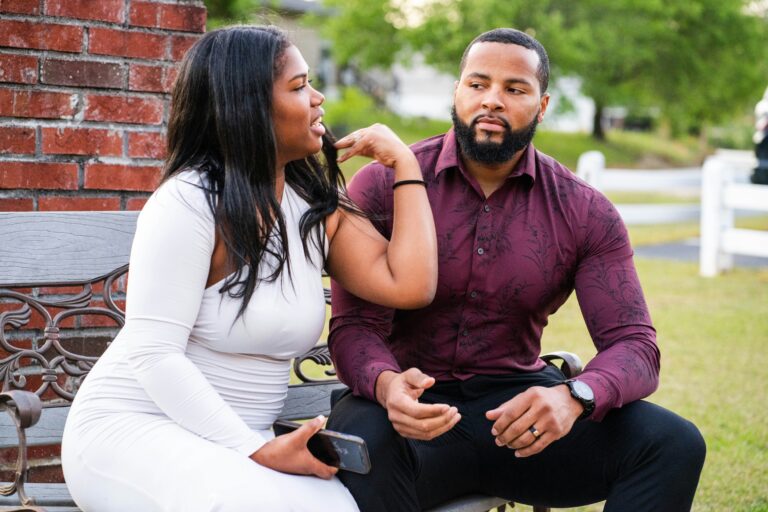
Photo by Allison Heine on Unsplash
Getting engaged is one of the most exhilarating moments in a person’s life. The joy, the celebration and the flood of congratulations from loved ones can make it feel like the hard part is over. In reality, the most important work is just beginning. The wedding is one day. The marriage is every day that follows.
Couples who build lasting, fulfilling marriages share one thing in common. They had the hard conversations before they said I do, not after. They talked about money when it felt uncomfortable. They discussed children when it felt too early. They explored their deepest values and their biggest fears before a shared life made those conversations feel loaded with consequence.
Here are 10 questions every couple should sit down and answer honestly before they walk down the aisle.
1. Do we want children, and if so, how many and when?
This is the question many couples assume they agree on without ever actually confirming it. Wanting children is not a small detail. It is a fundamental life direction. One person quietly hoping for three children while the other privately assumes you will remain child-free is a collision waiting to happen.
Moreover, the conversation should go deeper than yes or no. When do you want children? How would you handle fertility challenges? What are your views on adoption? Who will be the primary caregiver? How do you plan to balance parenting with careers? These follow-up questions reveal far more than the initial yes or no ever could.
2. How do we handle money and what are our financial goals?
Money is consistently cited as one of the leading causes of divorce. Yet many couples enter marriage without ever having a direct conversation about finances. Before you marry, both partners should know each other’s full financial picture including income, debt, savings, credit score and spending habits.
Beyond the numbers, the deeper conversation is about values. Does one of you save obsessively while the other spends freely? Does one believe in joint accounts while the other insists on financial independence? Do you have compatible views on generosity, investment and risk? Financial compatibility does not require identical habits. It requires mutual understanding and a shared framework for making decisions together.
3. What does our division of household responsibilities look like?
Nobody wants to discuss who cleans the bathroom before the wedding. However, unspoken and unequal divisions of domestic labor are one of the most common sources of resentment in long-term relationships. Research consistently shows that unequal household labor, particularly when one partner feels it is invisible or unacknowledged, quietly erodes the foundation of a marriage over time.
Have an honest conversation about expectations. Who cooks? Who manages bills? Who handles childcare logistics? Who maintains the social calendar? These conversations feel mundane but they matter enormously. Furthermore, revisiting them as life circumstances change is equally important.
4. How do we handle conflict?
Every couple fights. The question is not whether you will have conflict but how you will navigate it when it arrives. Do you both engage directly or does one partner shut down? Do you fight and resolve quickly or does one of you carry grudges for days? Is there a pattern of one person always apologizing regardless of who was at fault?
Understanding each other’s conflict styles before marriage gives you the tools to fight more effectively once you are in it. Additionally, couples who discuss conflict resolution openly tend to recover from disagreements faster and with less lasting damage to the relationship.
5. What role do our families play in our marriage?
Family dynamics are one of the most underestimated sources of tension in marriages. Questions about how often you visit extended family, how much influence parents have over your decisions and where you spend holidays can generate surprisingly intense disagreements.
Before you marry, clarify your boundaries together. How much involvement do you each want from your families? What happens if a parent disapproves of a major decision? How will you handle in-law relationships that feel intrusive or difficult? Presenting a united front on family matters begins with agreeing on what that front looks like before the wedding.
6. What are our religious or spiritual beliefs and how do they shape our life together?
Shared spiritual values can be a powerful source of connection and meaning in a marriage. Significant differences in religious belief or practice, however, can create friction that grows over time, particularly when children arrive and decisions about faith education must be made.
This conversation should go beyond simply identifying each other’s religion. It should explore how actively each partner practices, what role faith plays in daily decision-making, how you plan to raise potential children and how you will respect differences if your beliefs evolve in different directions over the years.
7. What are our career ambitions and how do they affect our life together?
Career goals have direct consequences for where you live, how much time you spend together, how you manage finances and how you divide household responsibilities. A partner who dreams of building a business that demands 80-hour weeks will create a very different shared life than one who prioritizes work-life balance above advancement.
Equally important is the question of relocation. Would either of you move for the other’s career opportunity? What happens if a dream job appears in another city or country? These scenarios may feel theoretical before marriage. After it, they become very real very quickly.
8. How do we define intimacy and what are our expectations?
Physical and emotional intimacy are central to a healthy marriage and yet they are among the topics couples discuss least openly before committing. Expectations around physical affection, frequency of intimacy, emotional availability and the way each partner gives and receives love vary enormously between individuals.
Understanding your partner’s love language, the way they naturally express and receive care, helps build a foundation of mutual consideration. Furthermore, discussing what happens when intimacy changes, as it inevitably does through stress, health challenges, parenthood and aging, prepares both partners for the full arc of a shared life rather than just its beginning.
9. What are our individual needs for space and independence?
Healthy marriages require 2 whole individuals, not 2 people who have merged completely into one identity. Some people genuinely need significant time alone to recharge. Others feel loved through constant togetherness. Neither tendency is wrong. However, a significant mismatch in these needs without open communication can lead one partner feeling smothered and the other feeling abandoned.
Talk about friendships, hobbies and personal time before marriage. How much independence does each of you need to feel like yourself? How do you support each other’s individual growth while building a shared life? The answer to this question shapes the day-to-day texture of the marriage more than almost anything else.
10. What does a successful marriage look like to each of us?
This is the question that ties everything together. Each person brings a model of marriage into the relationship, built from childhood observations, cultural influences, past experiences and personal values. Those models are not always compatible and they are not always conscious.
Asking each other directly what a successful marriage looks like opens a conversation that most couples never have. Is success measured by happiness, stability, growth, adventure or security? What does a good partnership feel like on an ordinary Tuesday? What does it mean to truly choose each other every day rather than simply staying together by default?
The couples who ask these questions before marriage are not the ones who have everything figured out. They are simply the ones brave enough to begin the conversation. That willingness to be honest, vulnerable and genuinely curious about each other is not just good preparation for marriage. It is the foundation of one.
This article is for informational purposes only. For personalized relationship guidance, consider speaking with a licensed couples therapist or relationship counselor.
About the Author