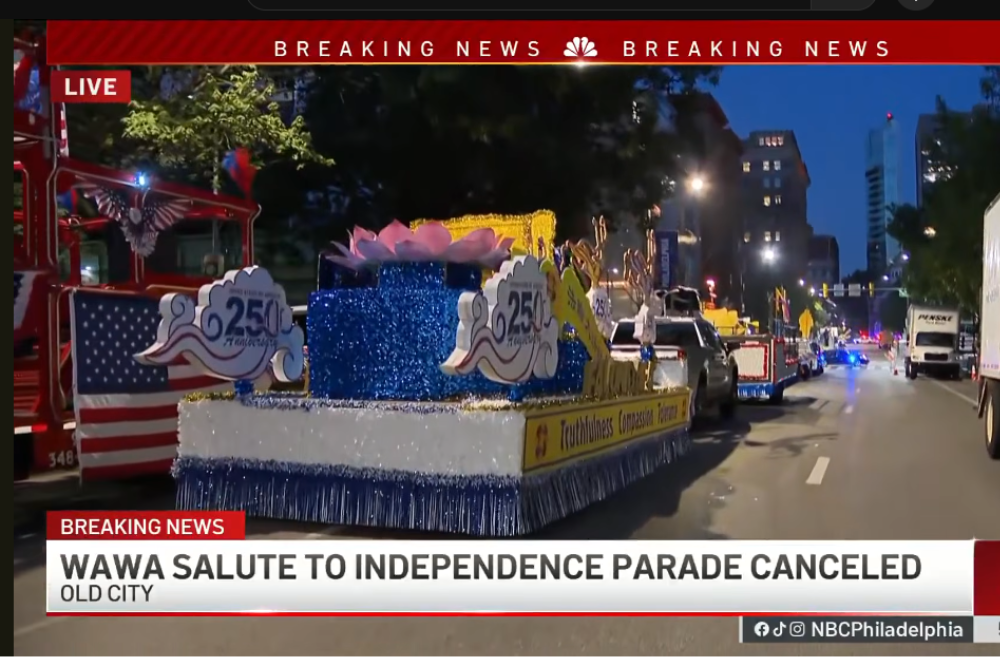
Photo screenshot: NBC10 Philadelphia YOUTUBE/Philadelphia's Salute to Independence Parade canceled due to dangerous heat
Philadelphia had one of the most ambitious Fourth of July celebrations in the country planned for this weekend. It did not happen. Dangerous heat forced organizers to cancel the Wawa Welcome America Salute to Independence Semiquincentennial Parade on July 3, just hours before its noon start time. The parade was set to be the largest professionally produced semiquincentennial parade in the nation, marking America’s 250th birthday.
Fifty marching bands from across the country were scheduled to participate. Nineteen themed floats celebrating American history and culture were ready. Military units, performers representing all 50 states and territories and all 52 Miss America state and territory titleholders were set to march. NBC10 Philadelphia had live broadcast coverage arranged. None of it moved forward.
How the heat made the Philadelphia parade impossible
Organizers tried multiple times to adapt. Earlier in the week, they shortened the route from 2.4 miles to roughly one mile. On Thursday, they moved the start time up by an hour to avoid the day’s worst temperatures. Those adjustments were not enough. When forecasts confirmed conditions would stay dangerous through the day, organizers made the call to cancel entirely.
Philadelphia’s Public Health department placed the city under a Heat Health emergency that runs through Sunday. Temperatures on July 3 reached a forecast high of 104 degrees. The heat index climbed as high as 111 degrees. July 4 itself is expected to bring around 101 degrees with a heat index of 105. The city had already tied a daily temperature record of 103 degrees on July 2. The National Weather Service maintained extreme heat warnings across the region throughout the holiday weekend.
What else the heat canceled in Philadelphia
The parade was not the only event to fall. The Thursday evening Wawa Welcome America Salute to Service concert, which featured Queen Latifah on Independence Mall, also fell to the heat. The Philadelphia Celebration of Freedom Award Ceremony moved indoors rather than proceeding outside as planned on July 4. The FIFA Fan Festival in Lemon Hill Park, already running at reduced capacity because of World Cup weekend activity, cut its viewing schedule further. SEPTA Regional Rail also experienced delays and cancellations as heat pushed the infrastructure to its limits. The city activated cooling sites across the area for residents without access to air conditioning.
Not everything shut down. The National Constitution Center’s indoor ceremony honoring Pope Leo XIV with the Liberty Medal remained on schedule. Philadelphia’s July 4 fireworks celebration on the Benjamin Franklin Parkway also stayed planned for Saturday evening.
What the cancellations mean for Philadelphia communities
The events that fell apart were free public gatherings. For many Philadelphia families, particularly those in working-class neighborhoods and Black communities, events like the parade represent some of the only large-scale, no-cost celebrations the city offers. Losing them to a heat wave that is becoming more routine raises serious questions about how cities plan for extreme weather and how they protect residents without reliable access to cooling.
Philadelphia is also not facing this alone. Multiple cities across the country are navigating a holiday weekend defined less by celebration than by temperature forecasts and public safety warnings. The heat is not leaving before the weekend ends.
About the Author