The Belfast anti-immigrant protests knife attack response unfolded rapidly on Tuesday. Hundreds of protesters gathered across the city after police charged a Sudanese man in connection with a knife attack that occurred on June 8. Moreover, the attack left one person with serious wounds to the neck and head. Furthermore, police declared a critical incident in response to the original attack, a designation that signals a major and potentially ongoing public safety concern.
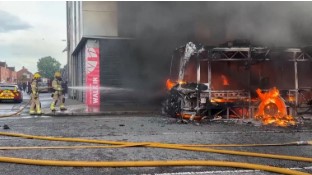
The protests escalated quickly into violence. Protesters set vehicles alight on Newtownards Road as police officers stood guard to contain the unrest. Moreover, smoke from the burning vehicles billowed across the area, visible in images and footage shared widely from the scene. Consequently, the city saw scenes reminiscent of earlier episodes of community tension in Northern Ireland’s recent history.
What triggered the protests and what happened on the streets
The knife attack on June 8 served as the immediate trigger for Tuesday’s unrest. Police charged a Sudanese man in connection with the attack within a day of the incident. Moreover, that charge appeared to be the catalyst that brought hundreds of people onto the streets within hours. Furthermore, the speed with which the protests organized suggests that tensions around immigration in Belfast were already elevated before this specific incident occurred.
Newtownards Road became the focal point of the unrest on Tuesday evening. Protesters gathered in large numbers and the situation deteriorated into the burning of vehicles. Moreover, officers from the Police Service of Northern Ireland deployed in significant numbers to manage the crowds and prevent further property destruction. Additionally, the scale of the police response reflected the seriousness with which authorities viewed the potential for the unrest to spread. Consequently, multiple streets in the area experienced disruption throughout the evening.
The anti-immigrant character of the protests reflects a pattern that has emerged across parts of the United Kingdom in recent years. Moreover, Belfast has experienced episodes of community tension tied to immigration debates on multiple occasions. Additionally, Northern Ireland’s particular political history gives any outbreak of street violence added sensitivity given the legacy of decades of conflict in the region. Consequently, authorities and community leaders respond to events of this kind with a level of urgency that goes beyond a standard public order incident.
The broader context of anti-immigrant sentiment in Northern Ireland
The Belfast anti-immigrant protests knife attack response did not emerge in isolation. Anti-immigration sentiment has grown across parts of the United Kingdom over the past several years, fueled by a combination of economic pressures, political rhetoric, and high-profile incidents that receive significant media coverage. Moreover, Belfast in particular has seen previous episodes where incidents involving individuals from migrant communities became flashpoints for broader community anger. Furthermore, social media plays a significant role in accelerating how quickly that anger organizes into street-level action.
Community and civic leaders in Belfast have repeatedly called for calm during previous episodes of unrest. Moreover, the Police Service of Northern Ireland has emphasized the legal consequences of violent protest on numerous occasions. Additionally, organizations working with migrant communities in Northern Ireland have raised concerns about the impact of this kind of unrest on vulnerable individuals living in the city. Consequently, the response to Tuesday’s protests involves not just law enforcement but a broader set of community organizations working to reduce tension.
The man charged in connection with the knife attack has not been named publicly. Moreover, police have not released extensive details about the circumstances of the attack. Additionally, the legal process following his charge will proceed through the Northern Ireland court system in the weeks and months ahead. Consequently, the judicial outcome of the case will likely attract renewed public attention as the proceedings develop.
What comes next for Belfast after Tuesday’s unrest
Tuesday’s protests added a new chapter to an ongoing conversation about community relations, immigration, and public safety in Belfast. Police are expected to investigate the individuals involved in setting vehicles alight and other acts of property destruction during the protests. Moreover, Northern Ireland’s political leaders will face pressure to respond publicly to the unrest in a way that addresses community concerns without legitimizing violence. Furthermore, advocacy groups representing migrant communities will likely call for stronger protections and clearer political leadership in the aftermath.
The Sudanese man charged over the knife attack will appear before the courts as the legal process proceeds. Moreover, that process will unfold independently of the street protests, though public attention may intensify again when hearings take place. Additionally, Belfast’s community organizations and faith groups have historically played a role in de-escalating tension after episodes of unrest. Consequently, the days following Tuesday’s protests will be as important as the protests themselves in determining whether the situation stabilizes or escalates further.
Source: Honolulu Star-Advertiser / Reuters / Isabel Infantes
About the Author