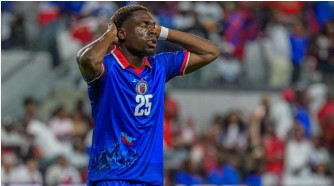
Haiti has been forced to redesign its 2026 World Cup jersey after FIFA ruled that its original design contained political imagery that violated tournament regulations. The decision comes only months after the country faced a similar issue with its uniforms for the Winter Olympics.
The jersey, created by Colombian sportswear company Saeta, originally featured artwork inspired by the final battle of the Haitian War of Independence in 1803. However, FIFA rejected the design during its approval process, requiring the manufacturer to remove the image before the tournament.
Saeta says design honored Haiti’s history
Saeta defended the original concept and said the artwork was never intended to send a political message. Instead, the company described it as a tribute to the people who continue to shape Haiti’s future.
According to the manufacturer, the jersey’s blue color represented the surrounding sea, while the red symbolized the nation’s strength and passion. Players even wore the original version during a warmup match against Peru before FIFA’s ruling took effect.
Nevertheless, the company agreed to comply with the governing body’s decision and produce a revised version for the World Cup.
Similar controversy surrounded Olympic uniforms
The latest dispute follows another design change involving Haiti’s Winter Olympic team earlier this year.
The International Olympic Committee also required officials to remove an image of Haitian founding leader Toussaint Louverture from the country’s opening ceremony uniforms for the Milan Cortina Winter Games. Olympic rules prohibit political symbols on official uniforms.
Designer Stella Jean responded by replacing the portrait with the silhouette of a horse set against tropical foliage. Later, she produced a separate version that restored the original artwork for commercial release.
As a result, Haiti has faced two separate uniform controversies involving international sports organizations within a matter of months.
Haiti’s independence remains a defining symbol
Haiti declared independence in 1804 after a successful revolution led by formerly enslaved people. The nation is widely recognized as the first independent country established through such an uprising.
For many Haitians, figures and events from that period represent national pride and resilience rather than political messaging. Even so, FIFA’s regulations prohibit imagery that could be interpreted as political or historical advocacy during official competitions.
The ruling has sparked discussion about where organizations should draw the line between cultural expression and political symbolism.
Haiti prepares for World Cup campaign
Despite the jersey controversy, Haiti’s focus now shifts to competition on the field.
The team opens its World Cup campaign against Scotland on Saturday in Foxborough, Massachusetts. It will then face five-time champion Brazil on June 19 in Philadelphia before concluding the group stage against Morocco on June 24 in Atlanta.
Meanwhile, supporters will see players wearing the revised kit rather than the original design that celebrated a pivotal moment in Haitian history.
Source: ESPN / Associated Press
About the Author