

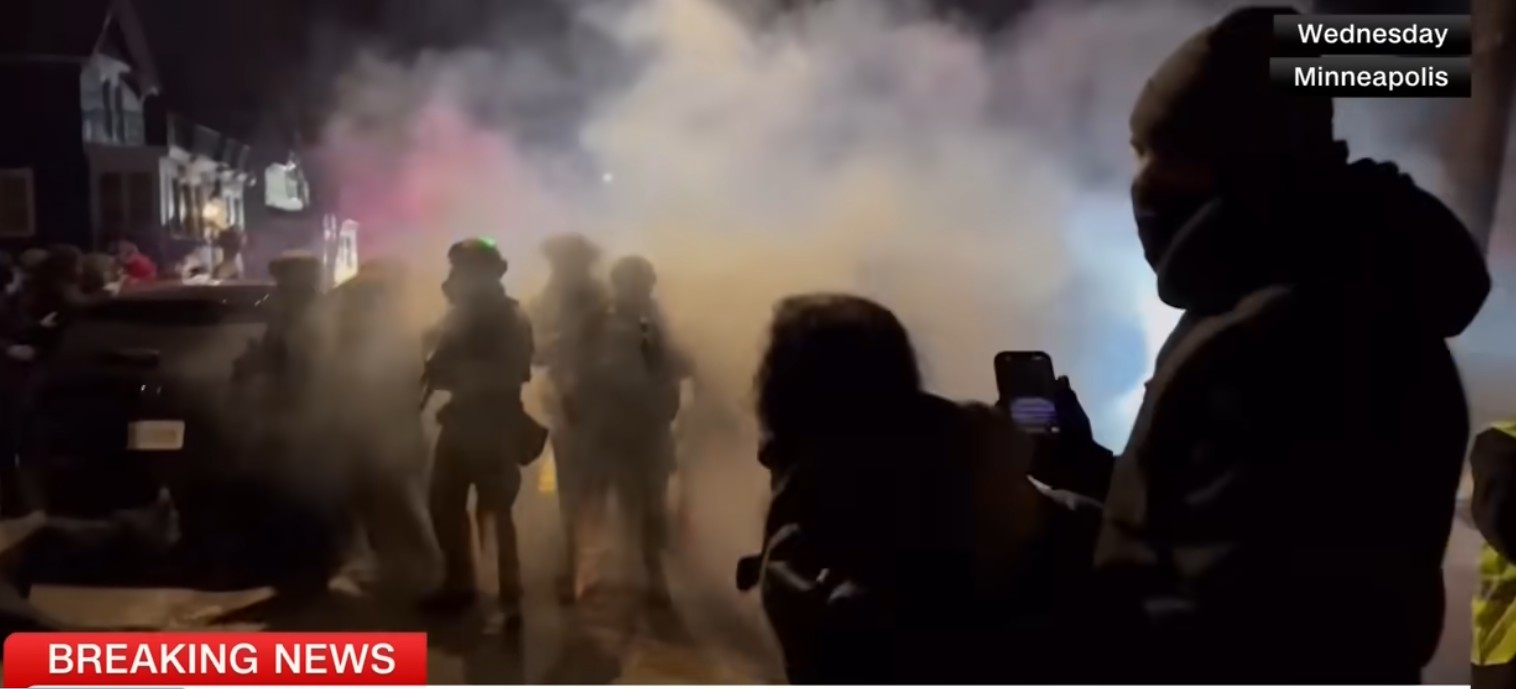
Courtesy: CNN (YouTube)
President Trump issued a threat on Thursday to invoke the Insurrection Act for the first time in more than three decades, potentially deploying U.S. military forces to Minneapolis in response to ongoing protests against Immigration and Customs Enforcement operations. The warning came after tensions escalated following the fatal shooting of Renee Nicole Good by an ICE agent last week.
The president used social media to announce his consideration of the rarely used 1807 law, stating his intention to quickly end what he described as a travesty taking place in Minnesota if state politicians do not stop what he termed professional agitators from attacking ICE personnel. The announcement marks the most serious threat yet to activate legislation that has remained dormant since the 1992 Los Angeles riots.
Understanding the historic legislation
The Insurrection Act comprises a group of statutes that Congress approved in the early 1800s to replace post-Revolutionary War legislation. The law empowers the president to deploy military forces on American soil under specific conditions, creating exceptions to the Posse Comitatus Act of 1878, which prohibits using the military as a domestic police force.
The legislation allows presidential deployment of armed forces and National Guard in three situations. First, the president can suppress an insurrection against a state upon request of its legislature or governor. Second, deployment is permitted to suppress an insurrection and enforce federal law when unlawful obstructions make enforcement impracticable. Third, military force can address insurrections or domestic violence that deprives residents of constitutional rights when states cannot or will not protect those rights.
How past presidents have applied the law
Throughout American history, the Brennan Center for Justice documents 30 instances of Insurrection Act invocations. However, modern usage has followed careful parameters that differ significantly from the current proposal. Every recent application has come either at a governor’s request or to expand civil rights protections over state objections.
Dwight Eisenhower and John Kennedy deployed the power to enforce desegregation orders in the Jim Crow South. Ronald Reagan considered it in 1987 during a federal prison hostage standoff, though he ultimately avoided troop deployment. George H.W. Bush became the last president to invoke the act when California’s governor requested assistance during the LA riots three decades ago.
Legal experts express concerns about precedent
Stephen Vladeck, a professor at Georgetown University Law Center, emphasized that presidents from both parties have exercised extreme caution when considering domestic military deployment. The vague criteria for invoking the act, combined with the absence of judicial or congressional review provisions, create significant potential for abuse according to the Brennan Center for Justice.
The law does not define key terms like insurrection, rebellion or domestic violence, and an 1827 Supreme Court ruling grants the president exclusive authority to determine whether circumstances warrant activation. Before invoking the act, the president must call for insurgents to disperse, after which unilateral power exists to declare an insurrection.
Current situation in Minneapolis
Federal immigration agents numbering approximately 3,000 have conducted operations in the Minneapolis area recently, with the Department of Homeland Security describing the effort as the largest DHS operation ever. Protests intensified after Good, a 37-year-old mother of three, was fatally shot by an ICE agent while apparently attempting to impede enforcement activities.
Minnesota Gov. Tim Walz opposes the immigration crackdown and appears unlikely to request federal troops. Minneapolis officials reported 30 arrests over a recent weekend, with one officer sustaining minor injuries. A new Yahoo/YouGov poll indicates that more Americans view the protests as mostly peaceful compared to those who consider them mostly violent.
The situation differs from previous military deployments Trump has already ordered, including federalizing the Washington, D.C., police department and deploying National Guard members to various locations. Legal challenges have successfully blocked some of these actions, and experts predict the Supreme Court would likely weigh in again if the Insurrection Act is invoked.
Source: Yahoo News
About the Author



1 thought on “Trump threatens rare law unused for 3 decades in Minnesota”