The NASA cosmic secret emerging from a stars final moments.
Courtesy:nasa-hubble-space from unsplash
Courtesy:nasa-hubble-space from unsplash
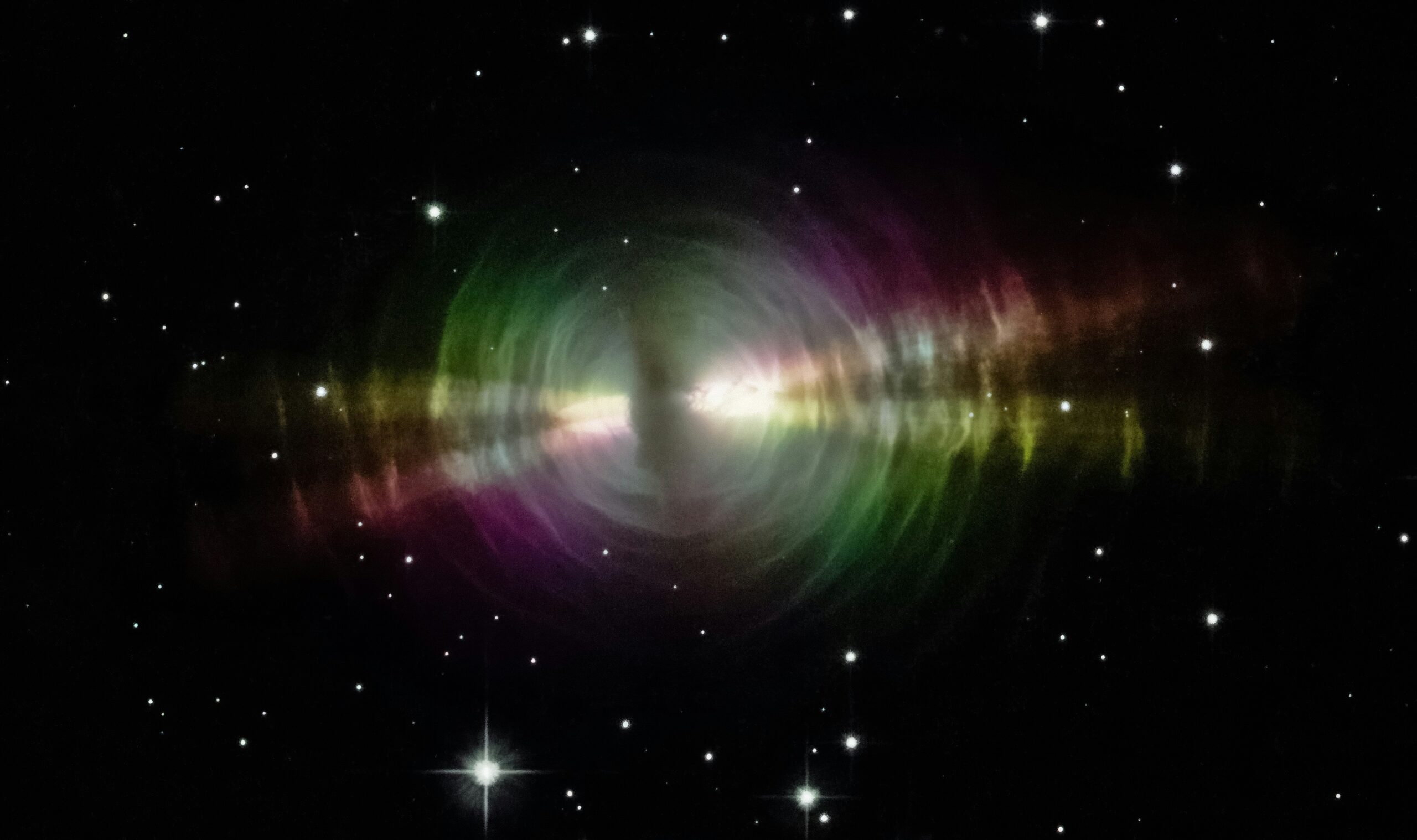
The universe holds no shortage of dramatic endings, but a newly released image from NASA’s Hubble Space Telescope brings an especially vivid moment into focus. A star located roughly 1,000 light years away in the constellation Cygnus is nearing the end of its life, and its final chapter is being written in the form of the Egg Nebula, one of the most uniquely structured objects in the night sky.
The nebula has long been known for its distinctive appearance, which resembles a yolk encased in hazy layers of dust. The latest view from Hubble brings this structure into even sharper detail, showing intricate arcs, layered shells and beams of light that break through the surrounding material. Scientists believe this rare celestial scene offers a remarkably close look at what happens when a sun-like star approaches its final transition.
The Egg Nebula’s rare evolutionary moment
The Egg Nebula is considered a pre-planetary nebula, placing it in an exceptionally brief stage in the lifecycle of a star similar to our own Sun. This phase lasts only a few thousand years, making it uncommon to observe in such detail.
Unlike many nebulas that glow due to ionized gas, this one remains dark except for where the star’s light escapes through gaps in its dusty shroud. The result is a dramatic pattern of luminous streaks that appear to cut across rippling arcs of material.
Researchers consider this stage an important bridge between a star’s final burning years and the moment its leftover core becomes hot enough to illuminate its own cloud of gas and dust more fully.
Patterns that point to a calm but powerful ending
While some dying stars erupt in explosive events, the structure of the Egg Nebula tells another story. The material surrounding the star forms organized layers that appear almost symmetrical from several angles. Astronomers studying these features suggest that the patterns did not result from violent destruction. Instead, they likely developed from repeated bursts of activity deep within the star’s core that pushed out material over time.
These outflows created the nebula’s layered appearance and its two prominent beams of light. As the star continues evolving, the surrounding gas is expected to heat up until it begins emitting its own glow. When this happens, the object will officially become a planetary nebula, a term that refers not to planets but to the shape these objects resemble when seen through early telescopes.
A clearer picture of how future stars form
The new image was made possible by combining earlier Hubble observations with recent captures. Together, they create a more complete portrait of the nebula’s structure and movement. Because the Egg Nebula is relatively close by cosmic standards, astronomers can study changes in its material with unusual clarity.
The star’s ejected layers represent the elements that will eventually contribute to forming new stars and planets. Scientists emphasize that planetary nebulas disperse material that becomes the foundation for entirely new systems. By examining the Egg Nebula, researchers gain insight into how the universe recycles these essential ingredients.
A window into our Sun’s far future
Our own Sun is expected to experience a similar transformation billions of years from now. Although the timelines differ, observing objects like the Egg Nebula provides a preview of the process. It shows how a calm star gradually sheds material, how its cooling core transitions into a hotter remnant and how the surrounding gas eventually glows with its own brilliance.
Astronomers continue monitoring the Egg Nebula to track subtle changes that unfold over time. Each new observation adds valuable clues about the forces shaping these final stellar acts and the role they play in the broader cycle of cosmic creation.
Source: Space.com
About the Author

Praise Swint
Wpseo_editor
Praise Swint is a contributor at Revelence, covering stories across news, entertainment, and culture.