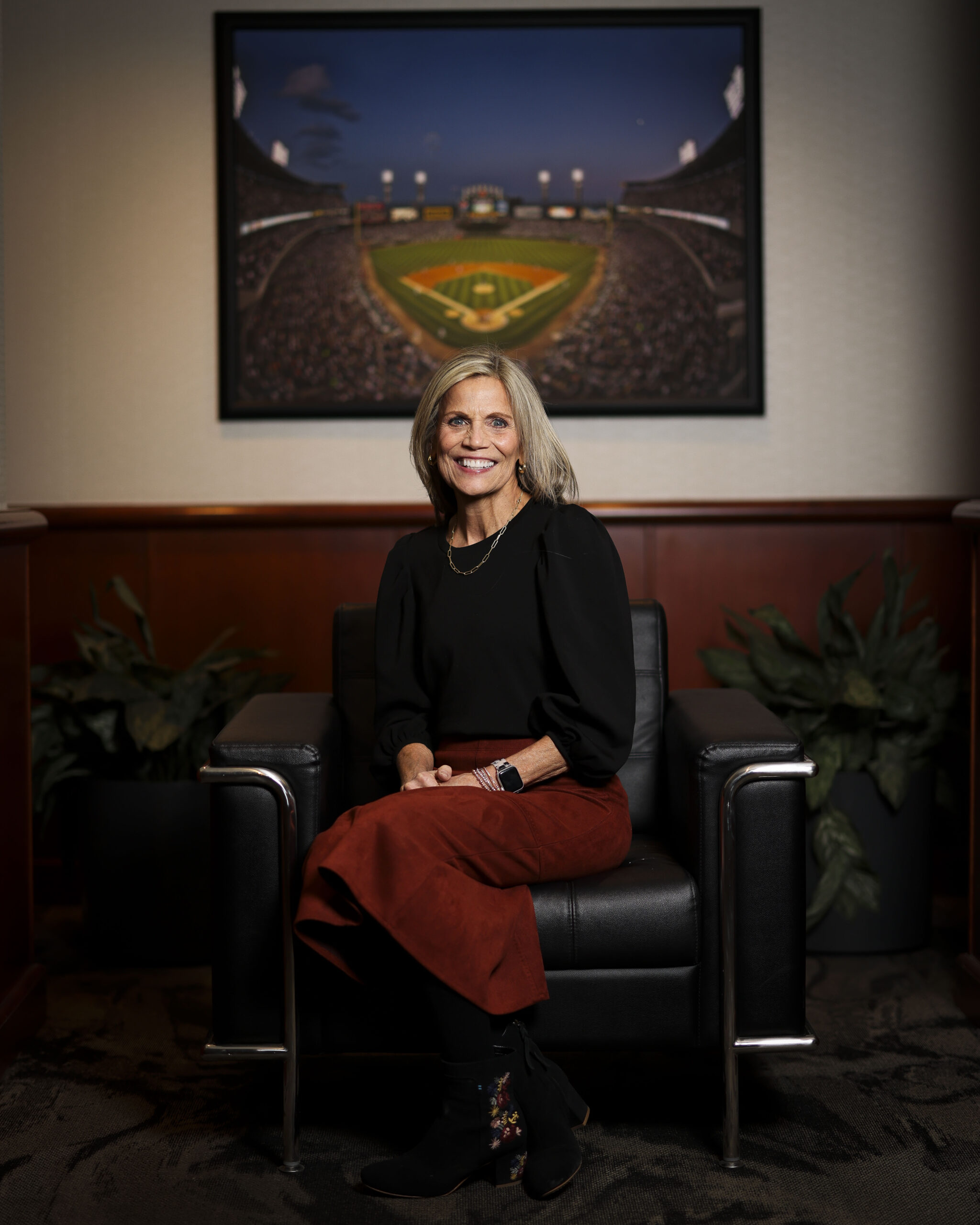

Christine O’Reilly-Riordan has spent years proving that a baseball organization can be about so much more than what happens between the foul lines. As Senior Vice President of Community Relations and Executive Director of White Sox Charities, she helped build one of the most intentional youth development programs in professional sports. Since 2007, the Amateur City Elite better known as the ACE program has given kids of color across Chicago the resources, visibility, and support to compete at the collegiate level, all at no cost to their families. Now the program includes something even more transformative: mental performance coaching rooted in the same curriculum the White Sox’s own big league players use. With May marking Mental Health Awareness Month, O’Reilly-Riordan opens up about why investing in the whole athlete mind included has become one of the most important things the organization does for Chicago.
Why did White Sox Charities choose to invest specifically in mental performance coaching for ACE student athletes?
If you don’t mind, I want to back up and first talk about why we invested in the ACE program overall. We’ve been supporting ACE since 2007. At that time, there was really amazing, untapped baseball talent with young kids in the city. But scouts and college coaches weren’t coming into Chicago to look at these kids or consider rostering them at the collegiate level.
So we felt we needed to create a program for kids of color whose families couldn’t afford the travel baseball world. We wanted to provide those financial resources and put them on a trajectory for success in life. We started with one team in 2007. Now we run nine or ten teams annually, covering all family expenses: uniforms, equipment, tournament play, and travel.
As the program evolved, we realized we needed to add academic support. We wanted the kids academically positioned to access a wide selection of schools. Then we also realized that competing for a college scholarship creates enormous stress. Pressure on the baseball field, pressure in school, peer pressure and for some kids, the weight of living in communities experiencing a lot of trauma. If we truly wanted to invest in these young men for success in life, we had to give them mental health tools. We needed to see them as full people, not just baseball players.
Mental health and mental performance are often discussed separately. How do you define the difference, and why are both important for young athletes?
We were very intentional about our research when designing this program. We knew there’s a lot of stigma around needing or asking for mental health services. These kids are here because they want to be big league players. So we modeled the program on a sports performance, mental strength curriculum then layered in mental health elements they could apply off the field too, not just on the mound or at the plate.
Framing it through the sports performance lens was the perfect entry point. It opened the door. From there, we built upon it, met the kids where they were, and learned what they truly needed.
What was the original vision behind the ACE program, and why invest in well-rounded youth leaders not just baseball players?
Look, I’m not going to lie it would be incredible if an ACE kid got drafted and made it to the major leagues. I’d want that kid to leave me a ticket at the gate. But more importantly, we wanted to get kids through college. Scholarship opportunities exist for kids who play at the collegiate level, whether at a JUCO or a four-year school.
The key was making sure these kids were being seen. A travel program puts them in front of scouts and coaches. Since that’s expensive, we invested in making it possible. What happened since then is something we didn’t fully anticipate. We created a family, a brotherhood a deep connection between our kids, coaches, and their families. It just keeps growing.
Why was it important to give young people access to the same resources professional athletes use?
These young people see themselves as those big league players on the field. That’s what they’re aspiring to. So we were very intentional about how we introduced mental skills coaching in a way they’d embrace.
We brought in the White Sox team psychologist. He created the curriculum and leads the mental health programming for our ACE kids. When you can tell a 14, 15, or 16-year-old, “Your favorite player, Davis Martin, uses Dr. Fish and that’s who’s working with you too,” that changes everything. The message lands: there are always ways to help yourself get better. The big leaguers do it. Now we’re offering you the same thing.
It legitimizes vulnerability. It tells these kids that feeling vulnerable in an area is okay. Even big league players need help. And we’re going to give these kids those exact same resources.

Tell us more about White Sox Charities what you do, why you exist, and how you serve the community.
White Sox Charities is, I like to think, the heart and soul of the organization. We are committed to being champions on the field. But being champions for the community is equally central to who we are. As a sports team, we have a great stage a ballpark, professional athletes as ambassadors and we use that to engage our fans, who are incredibly supportive.
We create opportunities where fans invest in White Sox Charities and get something back too: 50-50 raffles, galas, and events where they can meet players. It’s a give and take. I’m proud to say 96 cents of every dollar donated goes directly back into the community. The ACE program alone costs close to $600,000 a year, all funded through White Sox Charities.
Beyond ACE, we support robust grant giving. Nonprofit organizations throughout the city can request funding from us for programs that truly touch people in their hearts and homes.
What life lessons do you hope students carry with them long after their playing days are over?
Kids have told us I was in the batter’s box doing my breathing exercises, and then later I was stuck in traffic, stressed about being late for practice, and I did my breathing exercises right there. On their own, they apply these tools far outside the baseball field. We see it. We hear them talking. They reference skills from the curriculum completely organically.
But the most powerful thing I can share is this: some kids have gone through very tragic experiences — real trauma in their family lives. The first person they called was Dr. Fishbein. He shared his number with them, and they reached out. Sometimes the parents call too. That tells us everything about the value these kids place in these relationships and services. In their hardest moments, they knew where to turn. That, for us, is the most validating thing of all.
How does ACE align with White Sox Charities’ broader mission and commitment to Chicago communities?
We are very focused on kids and families. ACE gives us the opportunity to support youth who, before this program existed, were being left behind. Sustaining this since 2007 is an investment in the kids and in the community.
Even people whose kids aren’t in the program know about ACE. We even had a girl go through it. The Chicago community sees this program making a real difference. It has become a kind of service model others look to. When people hear about the success of our kids, it makes everyone feel good.
How can families get their children involved, and what other programs does the White Sox support?
ACE is a selective travel baseball program competitive by design. We hold tryouts every year. With nine or ten teams carrying 15 to 18 kids each, spots are limited relative to the size of the city.
That said, other ways exist to connect with the White Sox and youth baseball. In partnership with the Chicago Park District, we provide baseball instruction at summer camp programs in under-resourced communities. Kids discover the sport there and get on our radar. It creates a natural pipeline into ACE. For full details, families should visit whitesoxcharities.org or whitesox.com and head to the community page. Everything about ACE and our other youth programs lives right there.

If every student in the ACE program could walk away with one belief about themselves, what would you hope it would be?
I hope it would be: I am a success. And secondly my brothers have my back.
It’s not “I can be successful.” It’s I am a success. That’s not a future statement it’s a present one. And I truly believe that is what our kids walk away with: that belief, and that brotherhood.
That’s the best thing I can tell you about the ACE program.
For more information on White Sox Charities and the ACE program, visit whitesoxcharities.org or whitesox.com. Follow the Chicago White Sox and White Sox Charities on Instagram, Facebook, X, and LinkedIn.
Source: According to Porsha, featuring Porsha Monique and Christine O’Reilly
About the Author