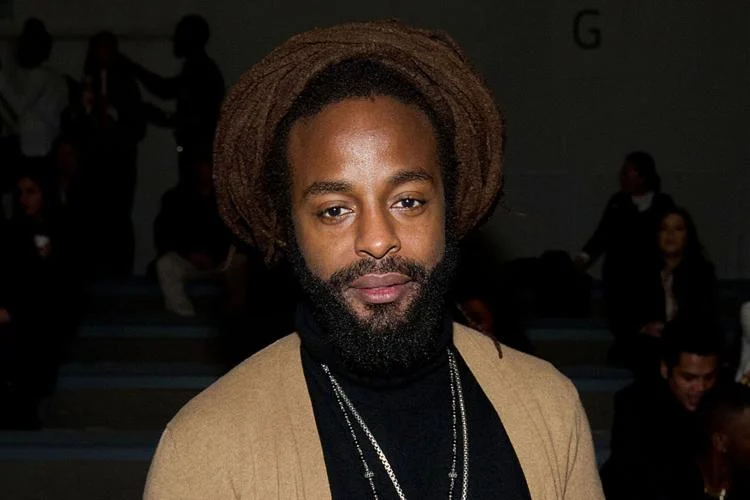
FILE - John Forte appears at the Fall 2013 Nanette Lepore Runway Show in New York on Feb. 13 2013. Dario Cantatore - Invasion
Dario Cantatore – Invasion
John Forté, the Grammy-nominated rapper and producer whose work helped define hip-hop’s golden era, has died at age 50. The musician was found unresponsive Monday afternoon at his Martha’s Vineyard residence, bringing a sudden end to a life marked by artistic brilliance and personal redemption.
Local authorities pronounced him dead at the scene, finding no evidence of foul play. The case has been referred to the medical examiner’s office for further investigation. However, family friends revealed that Forté had been managing a seizure condition that developed after a serious health crisis requiring hospitalization approximately one year earlier.
Managing a difficult diagnosis
The musician had been taking prescribed medication to control his seizure condition in the months before his death. Those close to him knew about his health struggles, though he continued working to maintain his artistic pursuits while managing the medical challenges. The condition represented another obstacle in a life that had already included significant hardships and remarkable comebacks.
Seizure disorders can prove unpredictable even with proper treatment and medication management. The condition requires constant vigilance and lifestyle adjustments that can impact daily activities and long-term planning. Forté approached his diagnosis with the same determination that characterized his approach to music and personal growth throughout his life.
Brooklyn beginnings shape artistic vision
Born January 30, 1975, in Brownsville, Brooklyn, Forté grew up surrounded by the neighborhood’s complex realities. His mother recognized his potential early and encouraged him to pursue violin, providing musical foundation that would later inform his production work. The classical training gave him understanding of music theory and composition that separated his hip-hop production from many contemporaries.
His talent earned admission to Phillips Exeter Academy, the prestigious New Hampshire preparatory school. The experience exposed him to different worlds while allowing him to form relationships that would prove crucial for his future career. The contrast between his Brooklyn roots and elite educational environment created unique perspective that enriched his artistic output.
Education and industry entry
After graduating from Exeter, Forté enrolled at New York University to study music business. The program provided practical knowledge about the industry’s commercial aspects while he continued developing his creative skills. His time at NYU positioned him to understand both the artistic and business dimensions of professional music careers.
His first major industry break came through employment at Rawkus Records, the independent label that became synonymous with underground hip-hop excellence during the late 1990s. The position allowed him to learn production techniques while networking with artists who shared his commitment to authentic expression over commercial compromise.
The Fugees and mainstream breakthrough
Forté achieved widespread recognition through contributions to The Fugees’ 1996 masterpiece The Score. As both writer and producer on the Grammy-winning, multi-platinum album, he helped craft one of hip-hop’s most commercially successful and critically acclaimed releases. The project showcased his ability to blend diverse musical influences while maintaining the raw energy that made hip-hop compelling.
His extensive collaboration with Wyclef Jean extended his influence beyond The Fugees, contributing to projects that pushed hip-hop’s creative boundaries. Forté also released solo material including the album Poly Sci, demonstrating his vision as an independent artist capable of carrying projects without collaborative support.
Incarceration and advocacy
A 2001 federal drug conviction resulted in a 14-year sentence that interrupted his career trajectory. Rather than abandoning music during incarceration, Forté continued creating while becoming an prominent voice in criminal justice reform discussions. His experiences provided firsthand perspective on issues affecting countless individuals trapped in the prison system.
President George W. Bush commuted his sentence in 2008 after Forté served seven years. The commutation came following sustained advocacy from supporters who recognized his rehabilitation potential and artistic value. His release allowed him to resume his career while speaking about second chances and reform.
A legacy preserved
Forté leaves behind two children and a body of work that captures a crucial moment in hip-hop history. His contributions to The Score alone ensure his place in the genre’s evolution, while his advocacy work demonstrates how artists can use their platforms for meaningful social impact.
Source: Dawn (Pakistan)/Associated Press
About the Author