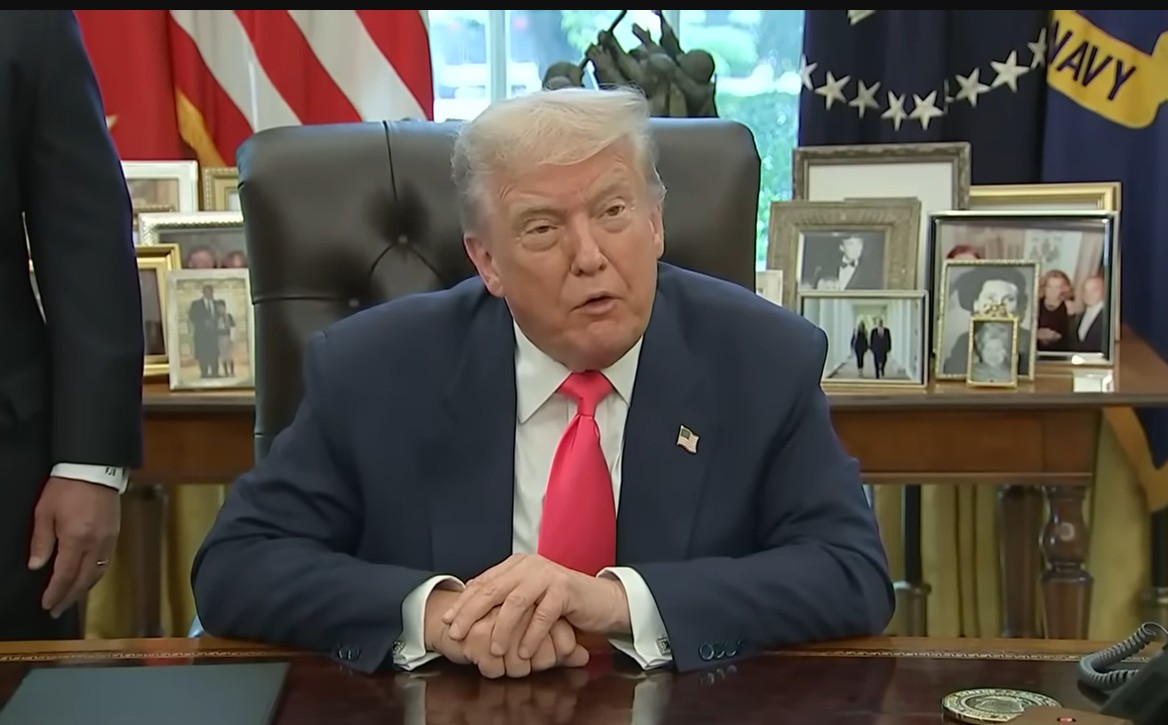
Politics Trump’s alarming tariff threat hits 8 European nations Praise Swint January 20, 2026 4 minutes read 0 Courtesy of FOX News (YouTube) Wall Street futures pointed sharply lower Monday as investors absorbed President Donald Trump’s threat to impose sweeping tariffs on eight European nations unless they support his proposed acquisition of Greenland. The announcement sent ripples through global markets, with the S&P 500 futures tumbling 1.4% and the Nasdaq dropping 1.73% in premarket trading. Trump declared that a 10% tariff on goods from the targeted countries would take effect Feb. 1, with potential escalation to 25% until a Greenland deal materializes. The SPDR S&P 500 ETF fell 1.42% while the Dow Jones declined 1.25%, reflecting widespread concern about the economic implications of a transatlantic trade confrontation. The eight countries facing penalties The tariff threat targets 1. Denmark, 2. Norway, 3. Sweden, 4. France, 5. Germany, 6. the United Kingdom, 7. the Netherlands and 8. Finland. These nations have reportedly expressed opposition to American territorial ambitions regarding Greenland, the autonomous Danish territory that Trump has repeatedly sought to acquire. The breadth of countries included in the threat underscores the seriousness of the administration’s position on Greenland. By targeting major European economies simultaneously, the move represents one of the most aggressive trade policy positions taken against traditional American allies in recent memory. French wine faces devastating levy Beyond the baseline tariff threat, Trump singled out France for particularly harsh treatment. The president announced a potential 200% tariff on French wines and champagne, allegedly in response to French President Emmanuel Macron declining to join Trump’s proposed Board of Peace initiative. This extraordinary tariff rate would effectively price French wine out of the American market, devastating an industry that depends heavily on U.S. consumers. Shares of luxury goods conglomerate LVMH, which owns prestigious champagne brands including Moët & Chandon, Dom Pérignon and Veuve Clicquot, fell $3 on the announcement. Remy Cointreau stock also experienced pullback as investors calculated the potential damage. European response turns confrontational European leaders responded forcefully to what they characterized as unacceptable economic coercion. France is reportedly pushing the European Union to deploy its Anti-Coercion Instrument, the bloc’s strongest economic counter-threat mechanism designed specifically to respond to such pressure tactics. This instrument would allow the EU to impose retaliatory measures against American goods and services, potentially escalating the situation into a full-scale trade war between the United States and Europe. The prospect of tit-for-tat tariffs threatens to disrupt decades of relatively open trade between these economic powerhouses. Safe haven assets surge higher Uncertainty surrounding the tariff threats drove investors toward traditional safe haven investments. Gold prices climbed to $4,725 per ounce, approaching the psychologically significant $5,000 threshold. Silver similarly advanced to $95, nearing the $100 mark as traders sought protection from potential economic turbulence. These precious metals movements reflect deep concern about global economic stability. When gold and silver rise simultaneously and dramatically, it typically signals that investors are repositioning portfolios defensively in anticipation of market volatility or economic disruption. Temporary setback or buying opportunity Some market observers suggested the tariff-induced selloff might create purchasing opportunities for patient investors. The reasoning holds that once trade tensions eventually resolve, stocks that declined on tariff fears could rebound quickly. Historical market patterns support this perspective. Major indices have consistently recovered from policy-driven selloffs, often rallying strongly once uncertainty dissipates. However, the unique nature of using tariffs to pressure allies over territorial acquisition makes predicting the timeline for resolution particularly challenging. Volatility expected to persist The tariff announcement compounds existing sources of market uncertainty. Ongoing tensions involving Iran, domestic issues and now European relations create a complex environment where volatility seems likely to continue. Until some of these pressure points ease, markets may struggle to establish clear direction. Investment advisors emphasize remaining calm despite the turbulence. Markets have weathered far worse disruptions throughout history and eventually recovered. Selling during panic often locks in losses and causes investors to miss subsequent recovery rallies when conditions improve. Source: AI Investor About the Author Praise Swint Editor View All Posts Post navigation Previous: Is the S&P 500 about to break out? What signals showNext: Netflix makes a decisive cash move for Warner Bros. Leave a Reply Cancel replyYour email address will not be published. Required fields are marked * Recipe Rating Recipe Rating Comment * Name * Email * Website Save my name, email, and website in this browser for the next time I comment. Δ Related News Politics 60 Years After MLK’s Speech, March on Washington Returns Praise Swint July 16, 2026 0 Politics Court Set to Rule on Trump’s Birthright and transgender case Praise Swint June 30, 2026 0 Politics Supreme Court Stops Trump From Firing Fed Governor Praise Swint June 29, 2026 0