

Xi Jinping investigates top general as US security concerns grow
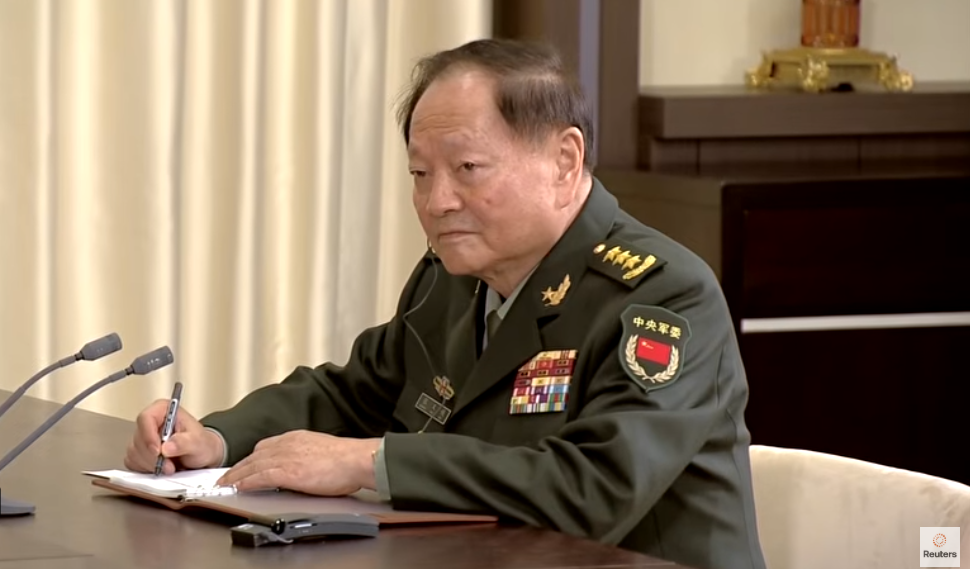
Courtesy: Reuters
Courtesy: Reuters
China’s sweeping military purge has entered a new and consequential phase, with President Xi Jinping ordering an investigation into one of the country’s most powerful generals, a move that is being closely watched in Washington for its potential impact on US national security and global stability.
Gen. Zhang Youxia, long regarded as second only to Xi within China’s military hierarchy, has been placed under investigation for alleged violations of discipline and the law. The decision marks one of the most dramatic leadership shake-ups in the history of the People’s Liberation Army and underscores Xi’s determination to exert absolute control over China’s armed forces.
While Beijing has framed the investigation as part of an internal anti-corruption drive, the fallout extends well beyond China’s borders. For the United States, the removal of such a senior military figure raises urgent questions about command stability, crisis management, and the future of US-China military relations.
A major shift inside China’s military leadership
Zhang’s investigation follows years of purges that have steadily thinned the upper ranks of China’s military command. Once seen as a trusted ally of Xi with deep revolutionary family ties, Zhang had remained in office beyond the typical retirement age and played a key role in overseeing operational readiness and defense planning.
His sudden downfall leaves China’s top military body with limited leadership continuity, signaling that no rank or personal history offers protection from Xi’s campaign. Analysts view the move as evidence that Xi believes deep structural problems remain within the military and that loyalty now outweighs experience.
Why the United States is paying close attention
For US defense officials, leadership changes at the highest levels of China’s military are not merely political developments. They directly affect how Beijing may act during moments of tension, particularly in areas where US and Chinese forces operate in close proximity.
Senior generals like Zhang were involved in strategic planning related to Taiwan, the South China Sea, and China’s growing military presence across the Indo-Pacific. Their removal introduces uncertainty into China’s chain of command, complicating US assessments of how decisions would be made during a crisis.
Taiwan remains the central flashpoint
The investigation comes at a time of heightened sensitivity around Taiwan, which China claims as its own and the United States is committed to supporting defensively. Any instability within China’s military leadership could alter how Beijing approaches the issue, either slowing decision-making or encouraging more forceful actions to demonstrate unity and control.
US intelligence agencies closely monitor these shifts, as miscalculations in the Taiwan Strait could quickly draw American forces into a broader confrontation.
Pentagon and intelligence reassessments underway
The Pentagon routinely evaluates China’s military readiness, and the removal of senior commanders forces analysts to revisit assumptions about operational competence and coordination. Leadership gaps can temporarily weaken command effectiveness, but they can also result in a more centralized and less flexible system shaped directly by Xi.
American officials also view the purge as a reflection of Xi’s broader governing style, one that prioritizes personal authority and ideological alignment over institutional balance.
Strain on military communication channels
Stable communication between the US and Chinese militaries is widely seen as essential to avoiding accidental escalation. Leadership upheaval can disrupt those channels, reducing the number of experienced counterparts available to manage incidents involving aircraft, naval patrols, or cyber activity.
As encounters between US and Chinese forces increase, the absence of seasoned commanders raises concerns about misunderstandings escalating into larger conflicts.
Global ripple effects beyond defense
The investigation also carries economic and diplomatic implications for the United States. Sudden shifts in China’s leadership structure can unsettle financial markets, affect multinational businesses, and influence congressional debates over trade, technology restrictions, and long-term competition with Beijing.
For US policymakers already wary of China’s trajectory, the latest purge reinforces perceptions of an increasingly centralized and unpredictable system.
A signal Washington cannot ignore
Although the investigation remains an internal Chinese matter, its consequences extend far beyond Beijing. For the United States, the fall of a top general is not simply a personnel change but a signal that could reshape military dynamics in one of the world’s most strategically sensitive regions.
Source: Reporting informed by coverage from The New York Times and international security analysis.
Source: The New York Times
About the Author

Praise Swint
Wpseo_editor
Praise Swint is a contributor at Revelence, covering stories across news, entertainment, and culture.







1 thought on “Xi Jinping investigates top general as US security concerns grow”