Courtesy:BBC News
In a sweeping and violent turn of events, Jalisco New Generation Cartel leader Nemesio Oseguera Cervantes, widely known as El Mencho, was killed in a major security operation in Jalisco on February 22, 2026, setting off waves of unrest across the country. The move marked one of the most significant blows against organized crime in Mexico in years but ignited widespread retaliation by cartel members and widespread disruption in large parts of the nation.
A major leader brought down in a coordinated operation
Mexican military and security forces conducted a targeted operation to capture the long‑sought cartel leader in the rugged region of Tapalpa, Jalisco. Intelligence support from the United States aided authorities in locating his hideout, where troops faced gunfire and heavy resistance from cartel gunmen. The operation resulted in the deaths of Oseguera Cervantes and several of his associates, and multiple weapons—including rocket launchers and armored vehicles—were seized by security personnel.
Oseguera Cervantes was a central figure in the CJNG’s rise to power, leading one of the most dangerous and fast‑growing criminal networks in Mexico. The cartel was notorious for trafficking large quantities of illicit drugs, including fentanyl and methamphetamine, and for using aggressive tactics against both rival criminal groups and government forces.
Violence and disruption spread across multiple states
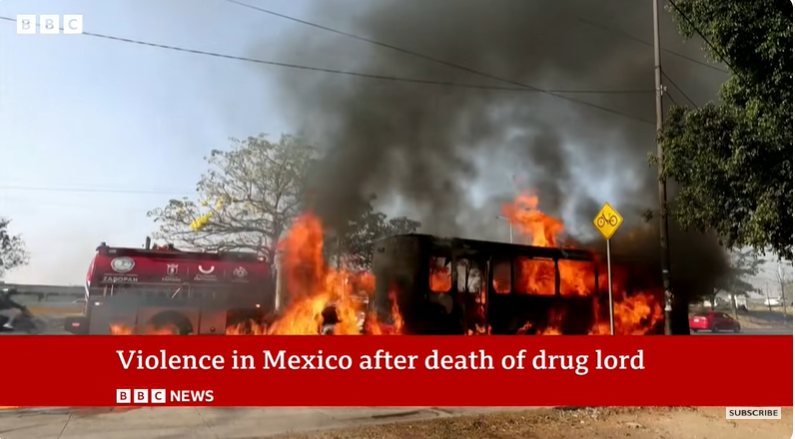
Almost immediately after news of the cartel boss’s death became known, a wave of retaliatory attacks by cartel operatives swept through at least 20 Mexican states. Roadways were blocked by burning vehicles and wreckage, and fires were set across urban areas in an apparent display of defiance and disruption. Authorities reported extensive blockades on major highways and a surge in coordinated violent incidents in regions from Jalisco to neighboring states.
The unrest resulted in significant casualties. Security officials confirmed that dozens of people, including members of Mexico’s National Guard and suspected cartel members, were killed in clashes following the operation. More than 70 deaths were reported, reflecting the ferocity of the confrontations and the widespread nature of the conflict.
Travel chaos and government response
The impact of the violence extended beyond immediate security concerns to affect daily life and travel across parts of Mexico. Several international airlines, including American, Southwest, United, Delta, Air Canada and others, reported flight cancellations or delays at major airports in affected regions such as Puerto Vallarta and Guadalajara. The disruptions forced tourists and regular travelers to adjust plans amid uncertainty.
In response to the violence, diplomatic missions issued travel advisories and urged foreign nationals to “shelter in place” in some areas until security conditions stabilize. Authorities also deployed thousands of troops to restore order and clear road blockades, working to prevent further escalation of cartel retaliation.
A power vacuum and questions about what comes next
While the elimination of a major cartel leader represented a strategic victory for Mexican security forces, analysts warn that it could also deepen instability if a clear successor does not emerge. The CJNG’s extensive network and influence raise concerns that power struggles within or between criminal organizations could lead to further outbreaks of violence in the coming weeks and months.
Domestic and international observers are watching closely as Mexico balances efforts to combat organized crime with the need to protect public safety, sustain economic stability in key regions and ensure security as the country prepares for high‑profile global events later in the year. The recent events underscored the complex challenges facing Mexican authorities in dismantling entrenched criminal power structures without unleashing broader cycles of retaliation.
Source: CNN, Reuters, AP
About the Author