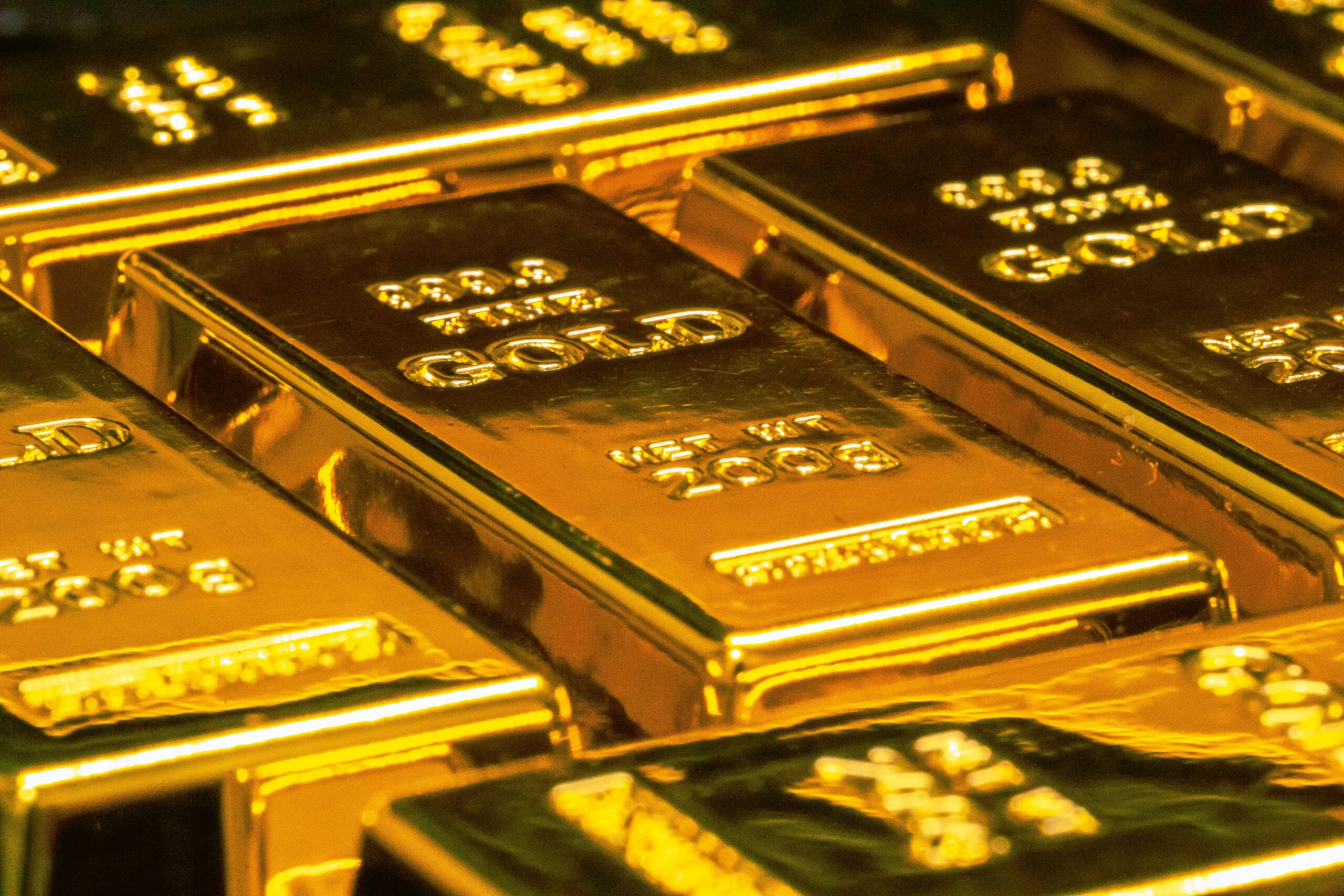
Courtesy:jingming-pan from unsplash
Gold, which spent much of 2026 trading near record highs, is suddenly in freefall. Bullion plunged as much as 3.8 percent to $4,320.30 an ounce on Sunday — a level less than a dollar above where it ended last year — nearly erasing the entirety of this year’s gains in a matter of days. The sell-off marks the eighth consecutive session of losses for gold and its biggest weekly drop since 1983, a decline that reflects a dramatic and rapid shift in how financial markets are reading the economic consequences of the war between the United States, Israel, and Iran.
Why the Iran war is actually hurting gold
The relationship between gold and geopolitical conflict is usually straightforward when the world feels dangerous and uncertain, investors rush toward gold as a safe haven and prices rise. The current situation in the Middle East is producing a more complicated and counterintuitive dynamic that is driving prices sharply lower rather than higher.
The key mechanism is oil. The Iran conflict has sent crude prices surging by approximately 50 percent since the fighting began on February 28, a disruption the International Energy Agency has described as the largest supply shock in the history of the global oil market. That kind of rapid and sustained increase in energy costs feeds directly into broader inflation across the global economy higher fuel prices raise the cost of transporting goods, manufacturing products, and delivering services, pushing consumer prices higher across virtually every sector.
Rising inflation fundamentally changes the calculus for central banks. When price pressures are building, the Federal Reserve and other major central banks are constrained in their ability to cut interest rates, and may even need to consider raising them. That prospect is deeply negative for gold, which pays no interest or dividend to investors who hold it. When interest rates are high or rising, the opportunity cost of holding gold increases — investors can earn meaningful returns from bonds and other interest-bearing assets, making a metal that produces no income comparatively less attractive.
Eight straight sessions of losses
The scale and duration of gold’s decline is worth pausing on. Eight consecutive sessions of losses is a rare and significant streak for an asset that had been one of the strongest performers of the early part of the year. The biggest weekly drop since 1983 puts the current sell-off in the company of some of the most dramatic moments in gold’s modern trading history, underscoring just how sharply the market’s view of the metal’s near-term prospects has shifted.
The price of $4,320.30 per ounce, while still elevated in historical terms, represents a position dangerously close to wiping out everything gold gained since January 1. For investors who entered the year with gold exposure expecting continued gains driven by geopolitical uncertainty, the past eight sessions have been a painful reminder that the relationship between global conflict and asset prices is rarely as simple as it appears.
What happens next
The trajectory of gold prices from here depends on 3 interconnected factors that are all deeply uncertain right now. The first is how the Iran conflict develops and whether the Strait of Hormuz can be reopened, which would relieve the oil price pressure that is driving the inflation concerns at the heart of gold’s decline. The second is how the Federal Reserve and other central banks respond to the evolving inflation picture, with any signal of delayed rate cuts likely to extend gold’s losses. The third is whether investors begin to treat the current level as a buying opportunity or continue to reduce their exposure as the conflict and its economic consequences remain unpredictable.
Goldman Sachs has warned that if ships remain reluctant to transit the Strait of Hormuz, elevated oil prices could persist well into 2027 a timeline that would keep inflation concerns alive and maintain significant headwinds for gold throughout the rest of the year.
For now, one of 2026’s most reliable trades has turned against the investors who counted on it.
Source: Bloomberg
About the Author