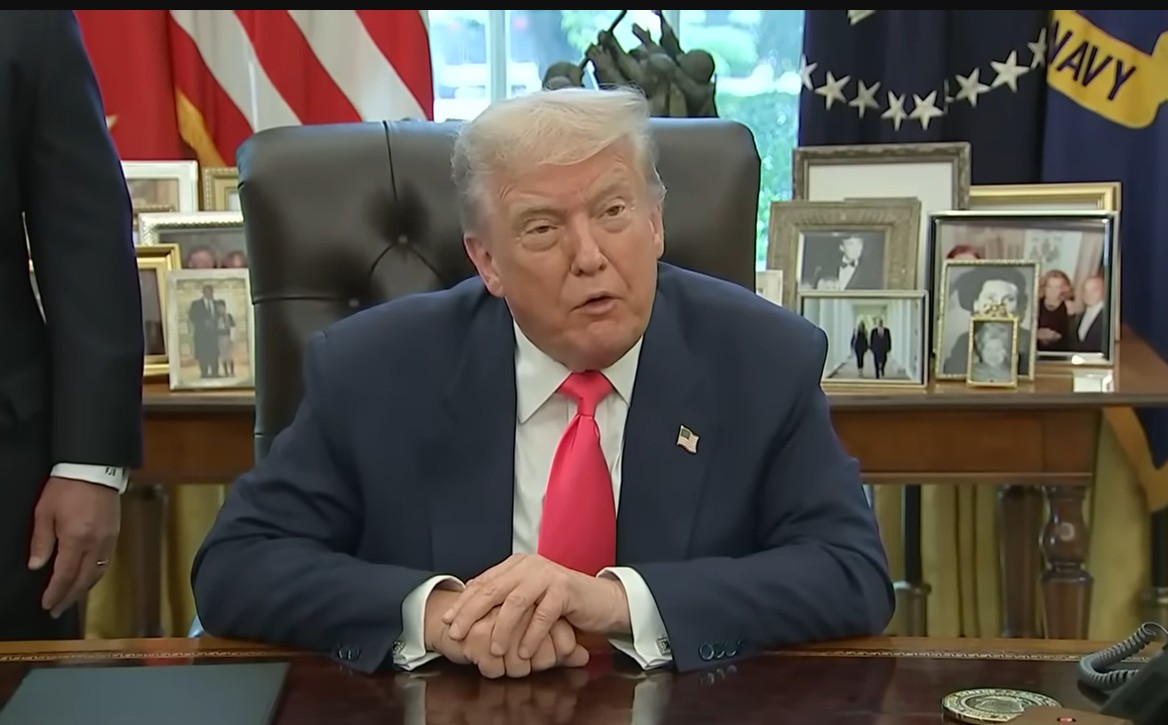
Courtesy of FOX News (YouTube)
The fragile ceasefire between the United States and Iran is approaching a critical turning point, with just days remaining before the agreement expires. As the deadline draws closer, both sides are weighing their next steps, balancing diplomacy with the possibility of renewed conflict.
High-level discussions are underway in Washington, where officials are assessing whether extending the agreement is still viable. The outcome could determine whether tensions ease or escalate in the coming days.
Tensions rise near a key global waterway
The Strait of Hormuz has once again become a focal point in the ongoing standoff. Reports of gunfire directed at vessels attempting to pass through the narrow waterway have raised concerns about safety and access.
Although some ships have managed to navigate the route, uncertainty remains over whether the passage is fully open. Conflicting signals from Iranian officials have added to the confusion, leaving shipping operators cautious about entering the area.
Military readiness increases in the region
As negotiations remain uncertain, the United States has continued to strengthen its presence in the region. Additional aircraft and resources have been deployed, signaling preparedness should talks fail.
This buildup reflects a broader strategy of maintaining pressure while keeping options open. The presence of military assets underscores how quickly the situation could shift if the ceasefire collapses.
Economic pressure shapes the conflict
A key element of the current standoff is the economic pressure placed on Iran. Restrictions affecting its ability to export oil are having a significant impact, limiting access to one of its primary sources of revenue.
The Strait of Hormuz plays a crucial role in this dynamic, as it is a vital route for energy shipments. Any disruption to this passage has global consequences, affecting not only regional players but also international markets.
Mixed signals complicate negotiations
Efforts to resume talks have faced challenges, with mixed messages emerging from different parts of Iran’s leadership. While some officials have indicated openness to dialogue, others have taken a more confrontational stance.
This lack of clarity has made it difficult to gauge the direction of negotiations. For observers, it highlights internal divisions that could influence how the situation unfolds.
Global impact remains a growing concern
Beyond the immediate region, the potential fallout from a breakdown in the ceasefire is being closely monitored worldwide. Disruptions to oil supply could affect multiple economies, particularly those that rely heavily on shipments passing through the Strait of Hormuz.
At the same time, prolonged instability could reshape geopolitical relationships and influence future policy decisions. The stakes extend far beyond the two countries directly involved.
A critical moment for diplomacy
As the deadline approaches, the coming days are expected to be decisive. Both sides face pressure to reach an agreement that prevents further escalation, while also addressing their respective priorities.
The situation reflects the complexity of modern conflicts, where military, economic and political factors intersect. Whether the ceasefire is extended or allowed to expire, its outcome will likely shape the region’s trajectory for months to come.
Source: Fox News
About the Author