Blue Origin just pulled off its biggest rocket breakthrough yet
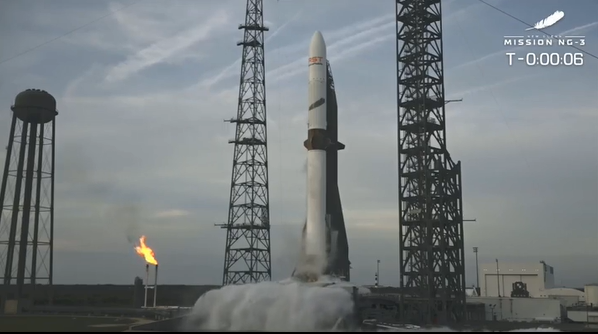
Courtesy:Jeff Bezos' space

Blue Origin has taken a significant step toward its long-term ambitions in space exploration, marking its first successful reuse of a major rocket component. The company’s New Glenn rocket launched on April 19, completing a mission that signals a shift in how it plans to compete in the growing commercial space industry.
The flight, known as NG-3, lifted off from Florida and carried a large communications satellite into low Earth orbit. While the mission itself was important, the real milestone came from what powered the rocket. For the first time, the launch relied on a previously flown booster, a move that reflects years of engineer
ing work focused on making space travel more efficient and cost-effective.
Reusable rockets have become a defining goal for private space companies, and this achievement positions Blue Origin closer to that vision.
A reused booster marks a turning point
At the center of this milestone is the New Glenn rocket’s first-stage booster, which had already flown on a previous mission. Instead of being discarded, the hardware was refurbished and prepared for another launch.
This reuse is a critical step because it reduces the need to build entirely new rocket components for each mission. By extending the lifespan of key parts, companies can lower costs and increase launch frequency.
The booster successfully separated from the rocket during flight and later landed on a sea-based platform in the Atlantic Ocean. This controlled landing demonstrated that the hardware could withstand multiple missions while maintaining performance.
The success of this process highlights the growing reliability of reusable rocket systems.
A mission carrying a major satellite payload
The NG-3 mission also delivered a significant payload into orbit. The satellite, designed to provide direct-to-cellphone connectivity, represents a new generation of communication technology aimed at expanding global coverage.
Its size and capability reflect increasing demand for space-based internet solutions, especially in regions where traditional infrastructure is limited.
By successfully carrying such a large payload while testing reused hardware, the mission demonstrated that performance was not compromised. This balance between innovation and reliability is key to building confidence among commercial and government partners.
Engineering upgrades and improvements
The mission included several technical refinements designed to improve performance and durability. Engineers upgraded systems within the rocket and enhanced its ability to handle the intense heat experienced during reentry.
Thermal protection systems were adjusted to better withstand the high temperatures generated as the booster returned to Earth. These improvements are essential for ensuring that reused components remain safe and effective over multiple flights.
The company also made adjustments to the rocket’s guidance systems, helping refine how it navigates both ascent and descent. These updates are part of a broader effort to make each mission more predictable and efficient.
Competing in a fast-moving space industry
Blue Origin’s progress comes at a time when reusable rockets are becoming central to the commercial space race. Companies are working to reduce costs while increasing the frequency of launches, and reusability is seen as a key advantage.
The New Glenn rocket is designed to be reused many times, with long-term plans calling for each booster to complete numerous missions. Achieving even the first successful reuse represents a major step toward that goal.
This development also strengthens the company’s ability to compete with other players already operating reusable systems. As demand for satellite launches and deep-space missions grows, efficiency and reliability will be critical factors.
What this means for future missions
The success of this mission sets the stage for more ambitious projects, including lunar exploration efforts. Blue Origin plans to use New Glenn to support future missions involving cargo and potentially crewed operations.
The company is also working on technologies that could play a role in returning humans to the moon. Reusable rockets will be essential in making those missions sustainable over time.
Each successful launch adds valuable data that helps refine future designs and operations. As the company continues to test and improve its systems, the goal of routine, reusable spaceflight becomes more achievable.
Blue Origin’s latest achievement reflects a broader transformation in space exploration, where innovation and efficiency are driving rapid progress. By successfully reusing a key component of its New Glenn rocket, the company has moved closer to a future where space travel is more accessible and repeatable.
Source: Space.com
About the Author

Praise Swint
Wpseo_editor
Praise Swint is a contributor at Revelence, covering stories across news, entertainment, and culture.