Courtesy:NASA
The next chapter in human space exploration is quickly approaching as NASA prepares to send astronauts toward the moon for the first time in more than five decades. The Artemis II mission represents a major milestone, marking the first crewed lunar journey since the Apollo era.
In the final days before launch, the four-member crew has shifted into a carefully controlled routine designed to ensure mission readiness. Their preparation reflects years of planning, testing and collaboration across international space agencies.
The crew prepares in strict quarantine
The first key step in the final phase involves isolation. The Artemis II astronauts have entered a prelaunch quarantine at the Kennedy Space Center in Florida. This precaution is meant to protect the crew from illness that could jeopardize the mission.
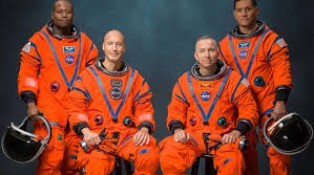
The team includes NASA astronauts Christina Koch, Reid Wiseman and Victor Glover, along with Canadian Space Agency astronaut Jeremy Hansen. Together, they represent a diverse and experienced group chosen to lead this historic journey.
Living in isolation before launch is a long-standing tradition in human spaceflight, ensuring that even minor health concerns do not interfere with mission success. The controlled environment also allows the crew to remain focused as the countdown continues.
The first crewed moon mission in decades
The second major development is the significance of the mission itself. Artemis II will be the first time astronauts travel toward the moon since 1972, when the Apollo program concluded.
While this mission will not land on the lunar surface, it is a critical step in testing systems that will eventually support future landings. The spacecraft will carry the crew on a journey around the moon and back to Earth, validating technology designed for deep-space travel.
This moment signals a renewed commitment to human exploration beyond Earth orbit, with long-term goals that include sustained lunar presence and future missions to Mars.
Systems and crew readiness align
The third sign of progress comes from mission readiness across all systems. Engineers and managers overseeing the launch have indicated that the spacecraft, rocket and ground infrastructure are all prepared.
Years of testing have led to this moment, with each component carefully evaluated to ensure safety and reliability. From propulsion systems to communication networks, every detail has been scrutinized.
The coordination between teams highlights the complexity of modern space missions. It also underscores the confidence that NASA and its partners have in the Artemis program’s next step.
Weather offers a promising window
The fourth and final factor shaping the launch timeline is the weather. Current forecasts suggest a strong likelihood of favorable conditions during the planned launch window.
A two-hour window has been identified for liftoff, beginning in the early evening. Weather remains one of the few variables that cannot be fully controlled, making favorable conditions a crucial element in mission success.
If conditions hold, the mission will proceed as scheduled, marking a defining moment for both the crew and the future of space exploration.
A defining moment for a new era of exploration
As the Artemis II mission approaches, the sense of anticipation continues to build. The combination of a prepared crew, tested systems and promising conditions signals that the journey toward the moon is no longer a distant goal.
Instead, it is becoming a reality shaped by years of dedication and innovation. For many, this mission represents more than a technical achievement. It reflects a renewed vision of exploration and the possibility of extending humanity’s reach beyond Earth.
With the countdown underway, Artemis II stands as a bridge between the legacy of past missions and the ambitions of the future.
Source: The New York Times
About the Author