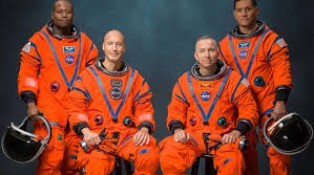
Courtesy:NASA
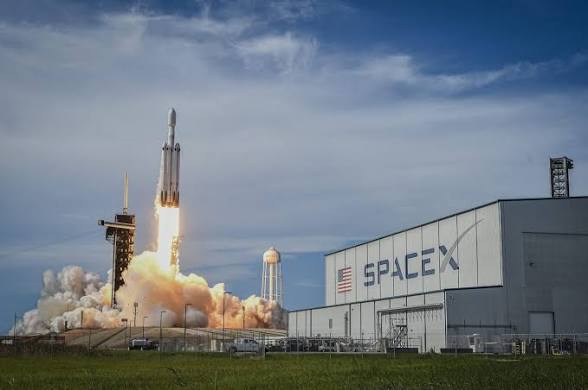
The NASA Artemis II mission is entering a critical phase as its crew prepares for a close flyby of the moon, marking a return to human deep-space travel not seen in more than five decades. After launching from Kennedy Space Center, the Orion spacecraft is now firmly within the moon’s gravitational pull, signaling a key turning point in the journey.
As the spacecraft continues along its path, the mission is already redefining the limits of human space exploration. The crew is expected to travel farther from Earth than any humans before, surpassing a record previously held by Apollo 13 mission.
Breaking a long-standing distance record
One of the most significant moments of the mission comes as the Artemis II crew exceeds the farthest distance ever traveled by humans. The Orion spacecraft moves beyond the previous record of 248,655 miles from Earth, setting a new benchmark in spaceflight.
At its peak, the spacecraft is projected to reach more than 252,000 miles from Earth. This achievement not only highlights advancements in spacecraft capability but also signals renewed momentum in NASA’s long-term lunar ambitions.
Navigating the far side of the moon
As the spacecraft loops around the moon, it will pass behind the lunar surface, temporarily cutting off communication with Earth for about 40 minutes. This period of radio silence is expected and carefully planned, though it remains one of the most intense phases of the mission.
During the flyby, the crew will also pass over historic lunar landing sites from the Apollo 12 mission and Apollo 14 mission missions. These moments serve as a reminder of past achievements while highlighting how Artemis II is building toward future exploration.
The closest approach to the moon will bring the spacecraft within roughly 4,000 miles of the surface, offering a unique perspective rarely experienced by human observers.
3. capturing new insights into the lunar surface
Beyond the technical milestones, Artemis II is also focused on science. The crew is tasked with observing dozens of geological features across the moon’s surface, providing insights that could shape future missions.
Working in pairs, astronauts will document variations in color and terrain, which may reveal details about the moon’s mineral composition. These observations are particularly valuable because human vision can detect subtle differences that satellites may miss.
The data collected during this phase will contribute to planning future landings, including potential missions targeting the lunar south pole, a region of growing interest for exploration.
the mission so far and what lies ahead
Artemis II is more than halfway through its mission, which is designed as a test flight of the Orion spacecraft with a human crew onboard. Along the way, astronauts have tested key systems, including navigation controls and life-support equipment.
Mission pilot Victor Glover has practiced maneuvering the spacecraft, preparing for future missions that may involve docking with lunar landers. Meanwhile, the crew has also evaluated onboard systems such as carbon dioxide removal and emergency procedures.
One of the more practical tests involves the spacecraft’s waste management system, a critical component for long-duration missions. Early technical issues appear to have been addressed, allowing normal operation as the mission continues.
Commander Reid Wiseman and mission specialist Christina Koch have also documented the journey with images of Earth and deep space, offering a visual record of this historic flight.
preparing for return to Earth
After completing the lunar flyby, the Artemis II crew will begin its journey back to Earth, with a planned splashdown in the Pacific Ocean off the coast of California. The return marks the final phase of a mission that is setting the stage for future lunar landings.
As NASA continues to refine its Artemis program, this mission represents a crucial step toward sending humans back to the moon and eventually beyond. The lessons learned from Artemis II will inform the next generation of space exploration.
Source: NPR
About the Author