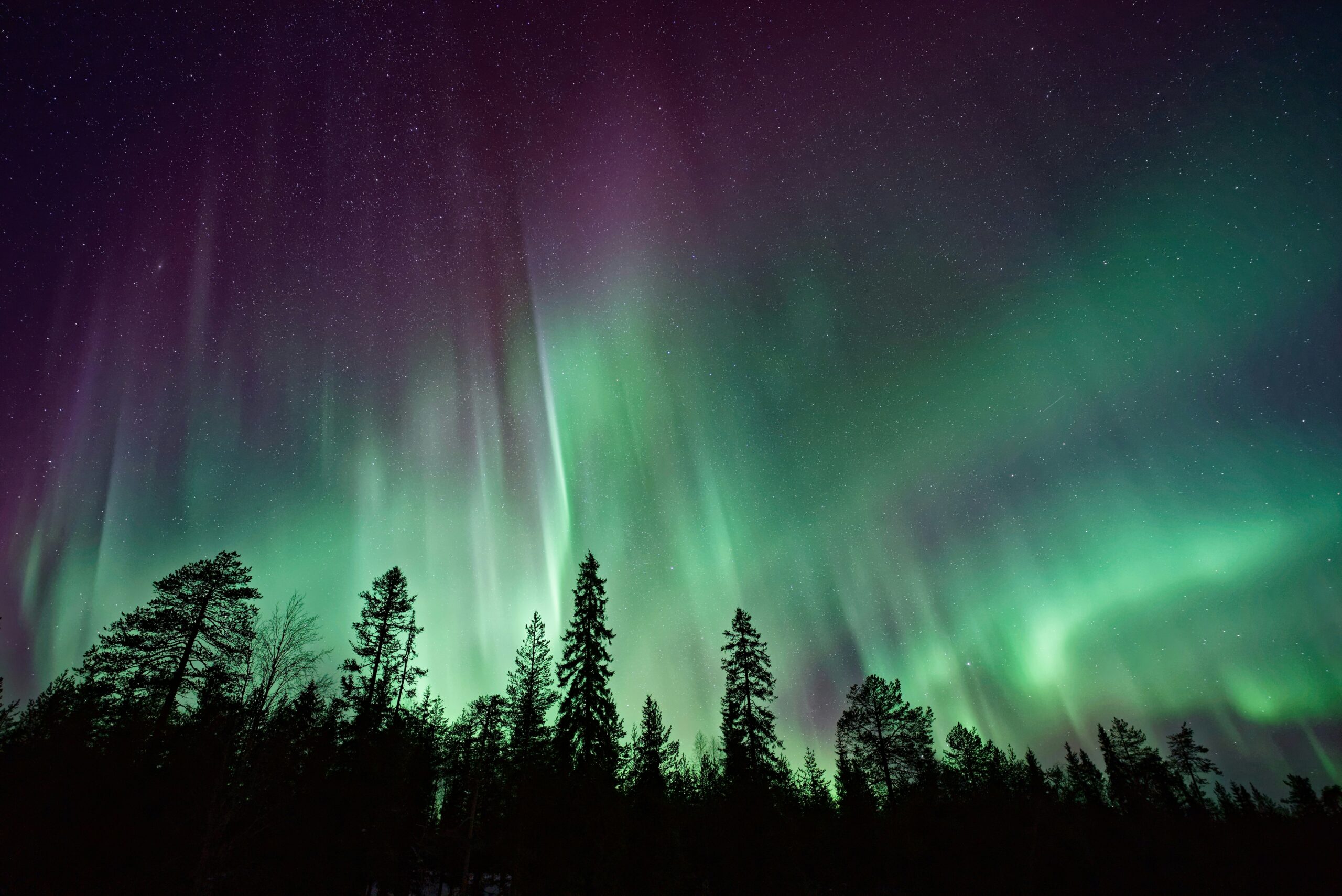
Photo by Vincent Guth on Unsplash
The northern lights have a higher than usual chance of appearing across several states along the U.S. Canadian border. NOAA forecasts the display for Thursday night into early Friday morning. A coronal mass ejection tied to a powerful X-class solar flare is approaching Earth and driving the increased activity.
Forecasters expect the geomagnetic disturbance to reach Earth starting Thursday. It could create more vivid and widespread aurora displays than usual across the northern United States.
What is driving this aurora activity
NOAA forecasts a Kp index of five out of nine for Thursday. This measurement suggests the northern lights could look brighter and more dynamic. Skywatchers might also see the aurora farther from Earth’s magnetic north pole than usual.
A coronal mass ejection and a powerful solar flare are fueling this heightened activity. Both erupted from the sun on June 30. Forecasters expect quiet to unsettled sky conditions Thursday night. A more extended period of geomagnetic storming should begin in the early morning hours on Friday.
Understanding coronal mass ejections
Large bursts of solar material escape from the sun’s surface during a coronal mass ejection. This material eventually reaches Earth’s magnetic field and triggers geomagnetic storms. Solar flares, powerful eruptions of radiation from the sun’s surface, often accompany these ejections. NOAA forecasters observed the most intense category of these eruptions, known as an X-class solar flare, earlier this week. Officials also warned the flare could cause strong high frequency radio blackouts on Thursday.
Where the aurora might be visible
NOAA’s aurora forecast map shows a low likelihood of visibility across several northern border states. These include parts of Washington, Idaho, Montana, North Dakota and South Dakota. Skywatchers farther east might catch the aurora from northern Minnesota, Wisconsin and Michigan’s Upper Peninsula. Alaska holds the strongest chances overall. Most of the state falls within NOAA’s high likelihood zone.
Tips for viewing the northern lights
Experts recommend traveling as far north as possible for the best chance to see the aurora. Head toward locations closer to Earth’s magnetic north pole in northern Canada. Find an elevated spot with a clear, unobstructed view of the northern sky, away from artificial light. Aurora activity tends to peak around midnight, so plan to watch between 10 p.m. and 2 a.m. for the best chance to catch the display.
How to photograph the aurora
Modern smartphones can capture high quality aurora photos with the right settings, according to experts. Turn off the camera flash, enable night mode and shoot in RAW image format for greater detail during editing. Bring a sturdy tripod and a remote timer too. Capturing enough light for a clear aurora photo requires holding the camera steady during a long exposure.
This article was created using information originally reported by Forbes
About the Author