Courtesy: X
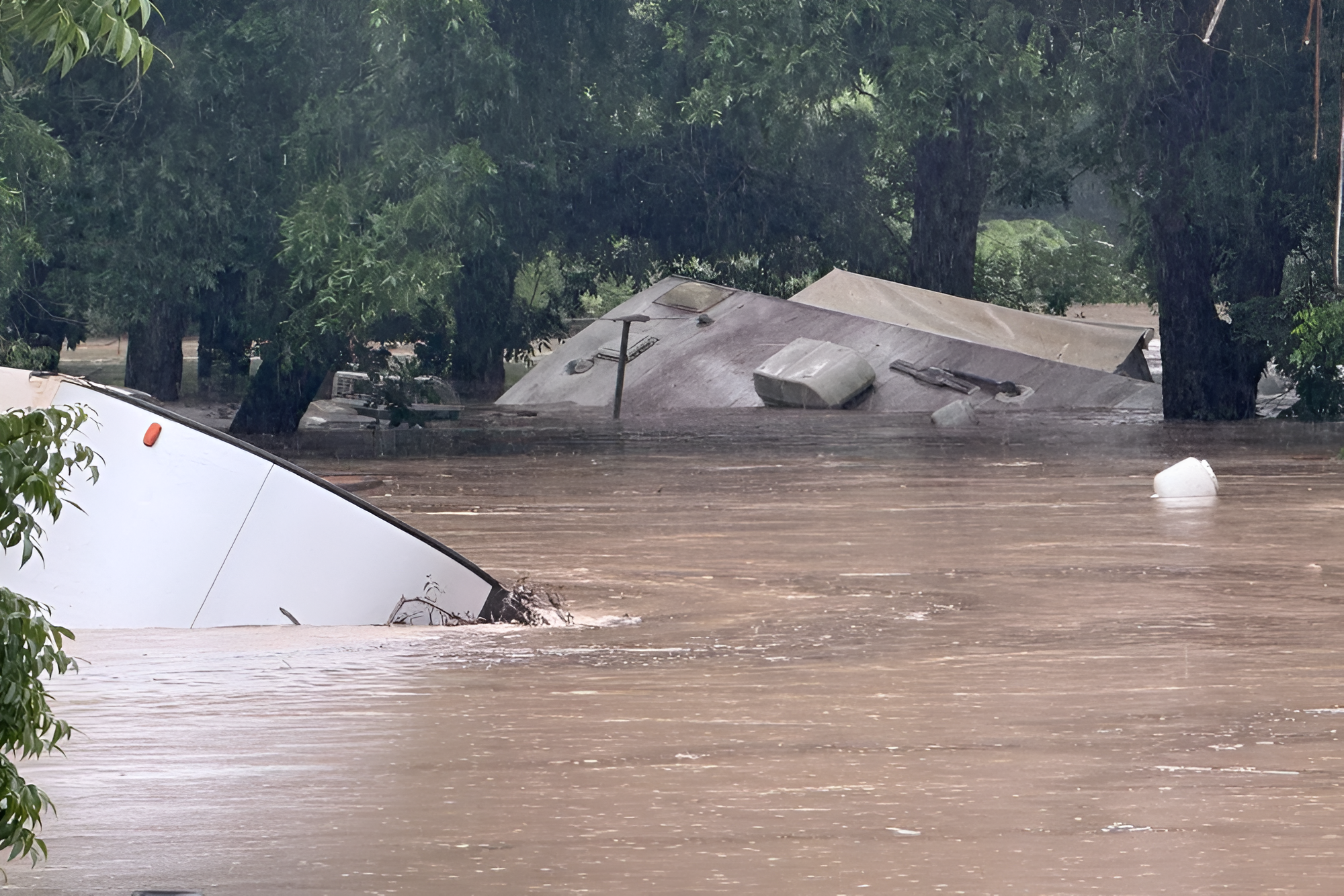
Catastrophic flash flooding tore through Texas Hill Country this week, killing at least two people and triggering more than 230 water rescues. The flooding struck a region still carrying the emotional weight of last July’s disaster, when flash floods along the same rivers killed more than 130 people, including dozens of children and counselors at a summer camp.
Parts of Hill Country received a full year’s worth of rain in just three days. Uvalde County alone recorded as much as 28 inches of rain over three days, an area spared from the worst of last year’s flooding. Other areas saw roughly a foot of rain. Rescuers using boats and helicopters saved more than 200 people, including drivers trapped in vehicles and residents stranded inside homes.
How the flooding unfolded across Texas Hill Country
The flooding arrived overnight, much like last year’s disaster. This time, many residents said they received far more warning. Forecasters issued urgent alerts telling people to move to higher ground as rivers rose by the hour. Some stretches of the Guadalupe River rose more than 30 feet.
Floodwaters overran Uvalde overnight, cutting off most routes out of the city. The Leona River, normally dry for most of the year, filled the streets. Texas Game Wardens rescued close to 150 people by Thursday afternoon, including families lifted by helicopter from homes surrounded by rising water.
One victim was swept away while driving on a flooded road near Uvalde. The other victim died in Kerr County. Jennie Steward learned Thursday that her husband John Mark Steward, 65, had died after floodwaters swept their mobile home off its platform and carried it down Goat Creek into the Guadalupe. The couple had spoken by phone the night before to mark their third wedding anniversary.
View this post on Instagram
How this Texas flooding compares to last year’s disaster
Governor Greg Abbott said more than 2,000 first responders had deployed across the affected region. He credited earlier evacuations and stronger warning systems with helping limit the damage compared to last year. Even so, he cautioned that hardest-hit areas were expecting more rain and remained at risk, with some rivers projected to reach historic levels.
The Guadalupe River has stayed below the record levels reached in 2025. Near Camp Mystic, which has not reopened since last year’s tragedy, the river reached about 20.5 feet, enough to cause flooding but below last year’s catastrophic crest. Kerr County’s sheriff’s office confirmed all summer camp campers remained safe, with most camps keeping children indoors during the worst of the storms.
Not every community avoided repeat devastation. In Ingram, Mayor Claud Jordan said this round of flooding proved more widespread across the town, even though water levels stayed lower than last year. Many local businesses still had not reopened from the previous disaster before this week’s flooding hit.
What comes next for Texas Hill Country
Governor Abbott declared a disaster in response to the flooding, and Texas Agriculture Commissioner Sid Miller declared an agricultural emergency as floodwaters damaged crops, livestock and farm infrastructure across the state. Roughly six million Texans remained under a flood watch through the week.
Forecasters expect another round of storms overnight into Friday, with additional rainfall between two and four inches likely and isolated areas potentially seeing up to eight inches. The weather pattern driving this week’s flooding is expected to ease by Friday afternoon, giving the region a dry stretch through the weekend. Uvalde and Johnson City remain the areas at highest risk in the short term.
The Hill Country’s geology makes it especially vulnerable to flash flooding. A thin layer of soil sits atop limestone bedrock, allowing rainwater to move quickly downhill and fill narrow river basins with little warning.
SOURCE: CNN
About the Author