

Courtesy of FOX News (YouTube)
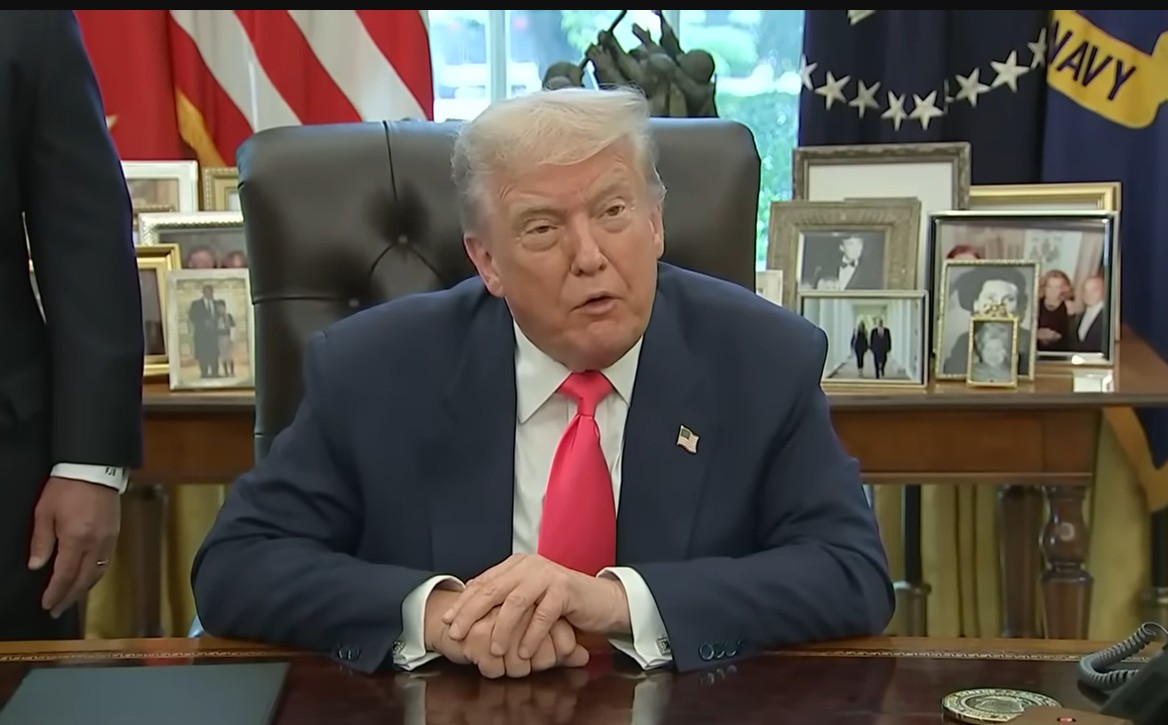
President Donald Trump sent an extraordinary letter to Norway’s Prime Minister Jonas Gahr Store that has ignited a firestorm of political controversy in Washington. The communication, which connected his ambitions to acquire Greenland with his disappointment over not receiving a Nobel Peace Prize, has prompted serious questions about presidential fitness for office among critics.
The letter’s unusual content has led Senator Ed Markey of Massachusetts to publicly call for invoking the 25th Amendment to the Constitution. The senator’s response reflects growing concerns among some lawmakers about the president’s decision-making and diplomatic approach during his current term.
What the letter revealed
Trump‘s message to the Norwegian prime minister blended foreign policy ambitions with personal grievances in a way that many political observers found unprecedented for presidential correspondence. The president explicitly linked his push to acquire Greenland, an autonomous Danish territory, with his feelings about being passed over for the prestigious international peace award.
Norway plays a unique role in the Nobel Peace Prize selection process, as the Norwegian Nobel Committee handles the award independently from the Swedish committees that manage other Nobel categories. This connection appears to have motivated Trump‘s decision to address his concerns directly to Norway’s leadership.
The letter demonstrates Trump’s continued interest in purchasing Greenland, an idea he first floated during his previous presidency. Denmark firmly rejected those overtures, stating that Greenland is not for sale. The autonomous territory has its own government and has been moving toward greater independence from Denmark.
Understanding the 25th Amendment
The constitutional provision that Markey referenced was ratified in 1967 following President John F. Kennedy’s assassination. The amendment establishes procedures for presidential succession and addresses situations where a president might be unable to discharge the duties of office.
Section 4 of the amendment, which critics are now discussing, allows the vice president and a majority of the cabinet to declare the president unable to fulfill his duties. This would temporarily transfer power to the vice president until the situation is resolved.
However, invoking this provision represents an extraordinarily high bar. The president can challenge such a declaration, which then requires a two-thirds vote in both the House and Senate to maintain the transfer of power. This makes it one of the most difficult constitutional procedures to execute successfully.
Political reaction intensifies
The letter has divided political observers along familiar partisan lines. Critics view the communication as evidence of erratic decision-making and poor judgment in diplomatic matters. They argue that mixing personal disappointments with official foreign policy communications undermines American diplomatic credibility.
Supporters of the president dismiss the concerns as politically motivated overreaction. They contend that Trump’s unconventional communication style has long been part of his political brand and does not reflect any inability to perform his duties as president.
Senator Markey’s call for considering the 25th Amendment represents the most dramatic response to the letter so far. The Massachusetts lawmaker has been a vocal Trump critic throughout both of the president’s terms in office.
Historical context matters
This is not the first time questions about invoking the 25th Amendment have surfaced during Trump’s presidencies. Similar discussions occurred during his first term, though no formal action was ever taken by cabinet members or congressional leaders.
The amendment has only been used voluntarily in American history, typically when presidents underwent medical procedures requiring anesthesia. No cabinet has ever used Section 4 to declare a president unable to serve against his will.
Constitutional procedures explained
If the 25th Amendment process were initiated, it would trigger a complex series of events. The vice president would immediately assume presidential powers and duties. The president could then submit a written declaration disputing his inability to serve, which would return power to him unless the vice president and cabinet reassert their position within four days.
At that point, Congress would have 21 days to vote on the matter, requiring a two-thirds majority in both chambers to keep the vice president in power. This high threshold makes successful invocation without presidential cooperation virtually impossible in practice.
The debate over Trump’s letter highlights ongoing tensions between traditional diplomatic norms and the president’s communication approach.
Source: WION
About the Author








1 thought on “Trump’s odd letter sparks 25th Amendment debate”