Courtesy:Netflix
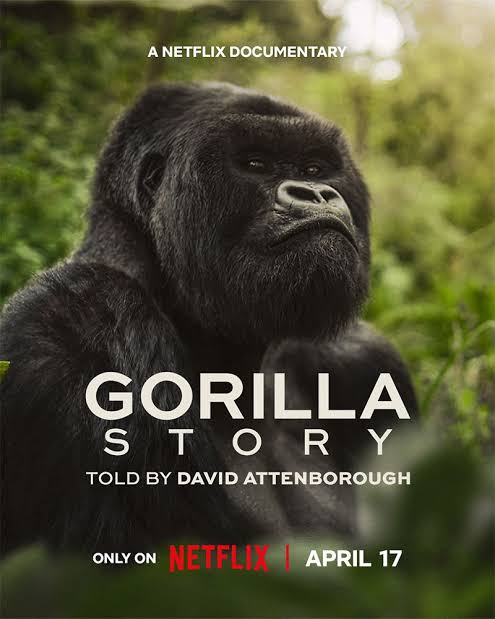
David Attenborough’s connection with mountain gorillas began with a quiet and unexpected moment deep in the forest. During an early expedition, he encountered a group of females and young gorillas gathered in a clearing. Rather than retreat, the animals remained calm, allowing him to move closer than he ever anticipated.
In that stillness, something extraordinary happened. A small, curious gorilla approached and made contact, resting gently against him. That young gorilla, later known as Pablo, would become central to one of the most meaningful chapters in Attenborough’s long career.
The moment stood out not just for its rarity, but for the sense of trust it represented. For Attenborough, it became a defining experience that shaped his understanding of animal behavior and emotional connection in the wild.
The rise of pablo from curious infant to leader
Pablo’s story did not end with that early encounter. As the years passed, the once-small gorilla grew into a dominant silverback. By the age of 18, he had separated from his original group to establish his own family, later known as the Pablo group.
This transition marked a critical moment in his life, reflecting both independence and leadership. As a silverback, Pablo became responsible for guiding, protecting, and maintaining the cohesion of his group in the challenging environment of the Virunga Mountains.
His strength was undeniable, with the physical power to defend his family against threats. Yet his leadership was defined by more than dominance. It was also rooted in stability, presence, and the ability to maintain harmony within the group.
A family legacy that continues decades later
Nearly 50 years after that first meeting, Pablo’s influence remains visible. His descendants continue to inhabit the slopes of the Virungas, forming a living legacy that reflects generations of survival and adaptation.
Within this extended family are individuals like Gicurasi and Teta, who now represent the heart of the group. Their roles highlight the continuity of leadership and the enduring structure of gorilla families. At the same time, younger members are growing and preparing for their own future roles, ensuring that the lineage continues.
The story of Pablo is not just about one gorilla. It is about an entire family shaped by time, environment, and shared experience. It reflects how a single life can influence generations within the natural world.
The emotional intelligence behind gorilla bonds
One of the most striking aspects of gorilla life is the depth of their social connections. Despite their immense physical strength, these animals are defined by gentleness and cooperation within their groups.
Newborn gorillas quickly become the center of attention, drawing curiosity and care from others. Their presence strengthens bonds and reinforces the group’s sense of unity.
These relationships are expressed through constant physical closeness. Touch, movement, and shared space create a network of connection that supports the entire group. This quiet communication system reveals a level of emotional intelligence that continues to fascinate researchers and storytellers alike.
For Attenborough, the most powerful form of communication comes through eye contact. A simple glance between gorillas can convey understanding, reassurance, and connection in ways that transcend language.
A story of connection, survival and hope
This documentary revisits a moment that began with a young gorilla’s curiosity and grew into a story spanning decades. It captures not only the life of Pablo, but also the resilience and continuity of his family.
Through rare footage and intimate storytelling, the film highlights behaviors and relationships that have rarely been seen before. It offers a deeper look into the lives of mountain gorillas while reinforcing the importance of conservation and respect for wildlife.
At its core, the story reflects the enduring bond between humans and animals, showing how a single encounter can leave a lasting impact across generations.

Source: Netflix
About the Author