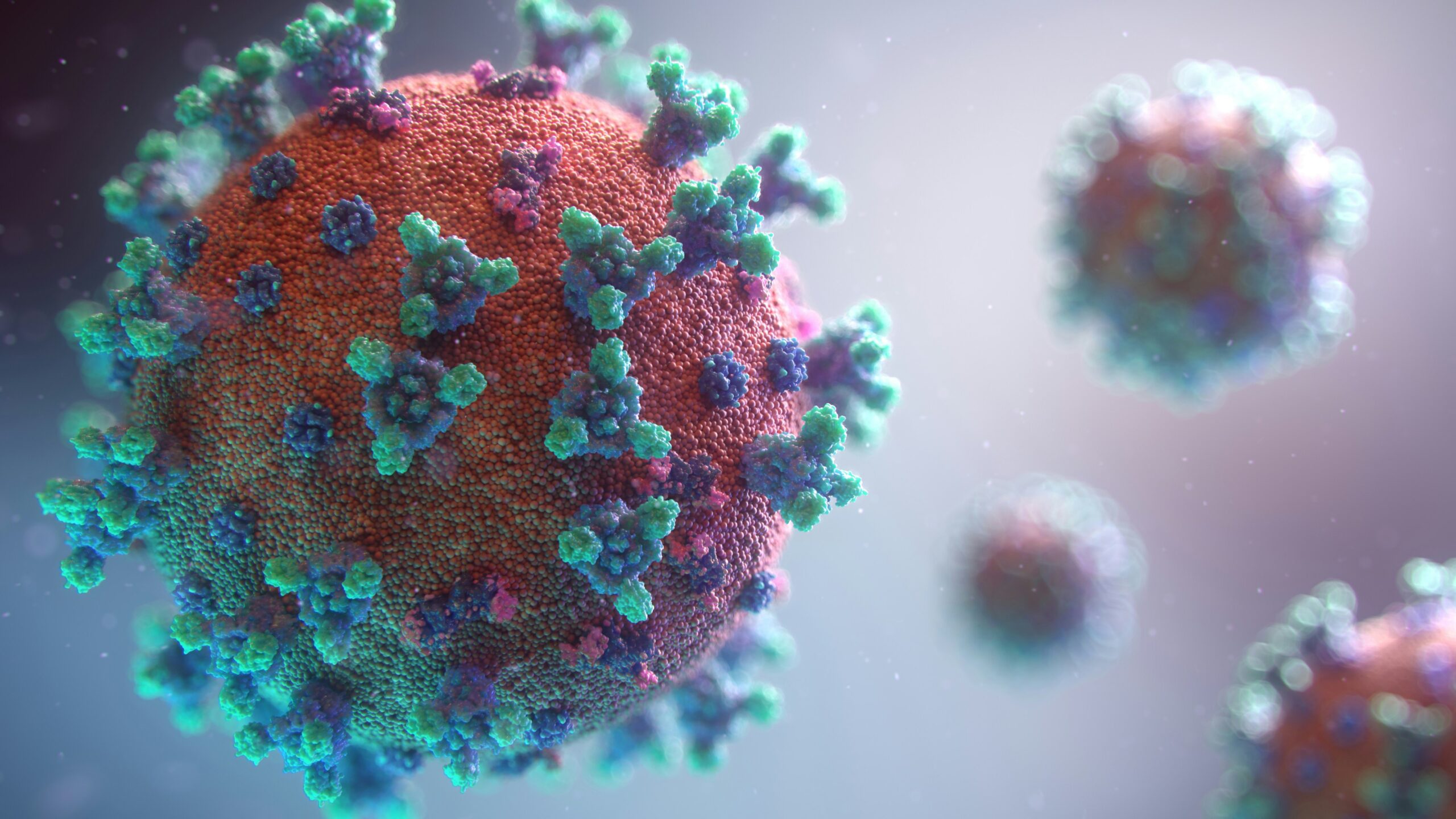
Courtesy:rnr8D3FNUNYfromunsplash
A new COVID-19 variant is quietly spreading across the United States, and health officials are paying close attention. The Centers for Disease Control and Prevention has identified BA.3.2, a new lineage of SARS-CoV-2 that is genetically distinct from the JN.1 variants that have circulated in the country since January 2024, in samples collected from 25 states. The variant has also been detected in at least 23 countries as of February 11, signaling that its reach is already global and its trajectory warrants serious monitoring.
What makes BA.3.2 particularly noteworthy is not just how widely it has spread but what it carries with it structurally and what that means for people who believe they are protected by vaccination or prior infection.
What makes BA.3.2 different from previous variants
The defining characteristic of BA.3.2 is the sheer number of changes it carries in its spike protein, the part of the virus that allows it to enter human cells. The variant has approximately 70 to 75 mutations in that spike protein, a number that is significant because it gives the virus meaningful tools to work around immunity that people have built up either through vaccination or previous COVID-19 infections.
Health experts describe this quality as immune escape, meaning the variant may be able to partly evade the protections that most Americans currently have against the virus. Critically, experts have been careful to clarify that immune escape does not automatically translate to more severe illness. The current understanding is that BA.3.2 may make infections more likely for people who would otherwise be protected, but it does not appear to cause dramatically worse outcomes than recent variants.
BA.3.2 is also still evolving. Researchers have already identified 2 distinct sublineages, designated BA.3.2.1 and BA.3.2.2, indicating that the virus continues to mutate and that surveillance of its development will need to remain active and ongoing.
How BA.3.2 arrived in the United States
The variant’s path into the United States began in June 2025, when it was first detected in a person traveling from the Netherlands. Its emergence in the US was not an isolated event by the time it was identified stateside, weekly detections of BA.3.2 had already risen to approximately 30 percent of cases in Denmark, Germany, and the Netherlands between November 2025 and January 2026, suggesting that the variant had already established meaningful circulation in Europe before making its way across the Atlantic.
The CDC identified BA.3.2 through multiple surveillance channels, including nasal swabs from 4 US travelers, clinical samples from 5 patients, 3 airplane wastewater samples, and 132 wastewater surveillance samples drawn from across 25 states. The combination of traveler detection and widespread wastewater presence indicates that the variant is not confined to a single entry point or region.
The 25 states where BA.3.2 has been detected
The CDC’s surveillance data places BA.3.2 in a geographically diverse cross-section of the country spanning both coasts, the South, the Midwest, and the Mountain West. The 25 states where the variant has been identified are California, Connecticut, Florida, Hawaii, Idaho, Illinois, Louisiana, Maine, Michigan, Maryland, Massachusetts, Missouri, New Hampshire, New Jersey, Nevada, New York, Ohio, Pennsylvania, Rhode Island, South Carolina, Texas, Utah, Vermont, Virginia, and Wyoming.
Health officials have noted that the true extent of BA.3.2’s presence across the country is likely larger than current data reflects. Not all states maintain equally robust genomic testing and surveillance programs, which means the variant is probably circulating in additional locations that simply lack the infrastructure to detect and report it at the same level.
What health officials are recommending
The CDC has emphasized the importance of ongoing genomic monitoring as BA.3.2 continues to evolve and its sublineages develop further. While the variant’s immune escape characteristics are a legitimate concern that warrants close attention, public health officials have stopped short of issuing specific new guidance beyond continued vigilance and surveillance.
For individuals, the current situation serves as a reminder that COVID-19 remains a virus in active evolution, and that staying informed about new variants and keeping vaccinations current continues to be the most effective individual-level response available.
Source: Times Now / CDC
About the Author