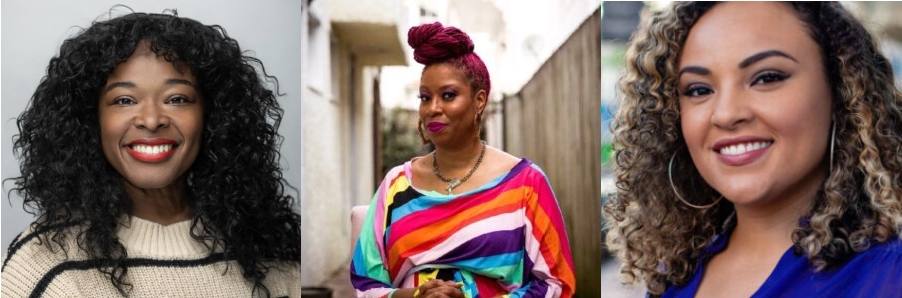
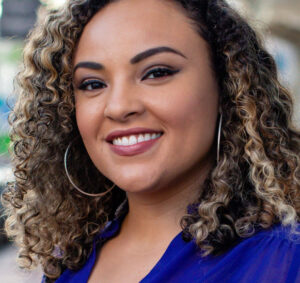
Across Baltimore, New Orleans and Oakland, a quiet revolution is underway and it is being led by women who refuse to let cities make decisions about young people without young people in the room. Alysia Lee, president and CEO of the Baltimore Children and Youth Fund, is building Baltimore’s first-ever Youth Master Plan after decades of the city operating without one. Dr. Rashida Govan, former executive director of the New Orleans Youth Alliance, is a nationally respected youth policy leader who helped architect one of the country’s earliest youth master plans, transforming how an entire city engages its youngest residents. And Selena Wilson, CEO of the East Oakland Youth Development Center, leads an almost 50-year-old institution rooted in a cascading mentorship model that has produced leaders from the streets of East Oakland all the way to the Obama administration. Together, these three women share a fierce and unshakable belief: that young people are not problems to be managed, they are citizens ready to lead and the cities that recognize this first will be the ones that truly transform.
What inspired the creation of the Baltimore Children and Youth Fund, and why does this work matter right now?
Alysia Lee: I represent the Baltimore Children and Youth Fund, which is a voter-approved youth fund here in the city of Baltimore. Eighty percent of our city voted to create the fund following the death of Freddie Gray while he was in police custody. There was an uprising in our city, and that uprising got national attention. Most of the people that were out in the streets peacefully protesting were young people. This idea around the Youth Fund was to also solidify the city’s commitment and understanding around the power that young people have always had in our city, to stand up for justice and to stand up for what’s right. We have a tax appropriation that is in perpetuity to support youth development for people between the ages of 0 and 24. There has come, because of the origins of the fund, some deep commitments around racial equity, around intergenerational learning, around community decision-making. We support mostly Black and brown-led organizations. Ninety percent of our grant dollars go to grassroots organizations. We combine grant dollars with professional learning and technical assistance.
How does the New Orleans Youth Alliance approach youth development differently?
Dr. Rashida Govan: I am the former executive director of the New Orleans Youth Alliance, which is a healing-centered youth development intermediary. We exist to support the program quality and professional development, organizational effectiveness, and policy work of youth development organizations. One of the primary foci of the organization is to center youth voice and leadership in the work that we do. It is our fundamental belief that work to improve the outputs or improve the quality of youth development programs cannot happen without youth giving input and insight into what that should look like. Young people said they want a seat at the table. They want to be able to influence what was happening. They want to be prepared to do that. We established a youth leadership fellowship designed to prepare young people to serve in decision-making roles, as leaders, as consultants themselves, as trainers. Over 40 young people have gone on to become consultants and leaders of organizations, and they played a significant role in the rollout of the Youth Master Plan.
What makes the East Oakland Youth Development Center’s model unique?
Selena Wilson: I am very proud to serve as the CEO of the East Oakland Youth Development Center. In addition to being CEO, the title that I am actually most proud of is alumni. I myself started at EOYDC when I was 4 years old. Over 50 percent of our professional staff are EOYDC alumni. We have had many EOYDC alumni go on to lead other organizations and play key leadership roles in presidential administrations, including the Obama administration. The model that we have here at EOYDC is really rooted around a concept called cascading mentorship. Young people should be in positions to provide peer and near-peer mentorship to each other. This concept has really become a model not just for our center, but a national and even international model. Our overall mission is to nurture the holistic development of young people all the way from kindergarten into adulthood so that they can live lives of prosperity, integrity, and purpose. We have existed for almost 50 years. We opened our doors in 1978. We have built this culture of pouring into the next generation, not only to serve as leaders of the future, but leaders of today. We have youth leaders who are a part of key decision-making. We consult with our young people around decisions that not only affect the center, but that affect citywide policy.
How does the Baltimore Children and Youth Fund put youth voice into real action?
Alysia Lee: When I was 13, someone in my community called me a leader. That led to me being elected to a board at Youth as Resources, which is a grantmaker in our city, comprised of young people who give grants to young people. To be at the age of 13, to have the autonomy to be able to set grant-making priorities and to write an RFP collaboratively with a group of young people and to be able to share and decide where resources were going as a young person was really liberating and exciting and powerful. Our governing body, our board of directors, is comprised of young people and is intergenerational. Twenty-five percent of our board are made of young people. Forty percent of our community grant reviewers every year are young people as well. We make sure that we are always investing dollars into young people, so we are making sure to pay them for their time.
What drew you to this work, Dr. Govan, and when did you realize it was necessary?
Dr. Rashida Govan: Somebody poured into me. I was one of those young people who was thrust to the front to tackle leadership roles in a variety of settings, and in fact, I probably did that more than I invested in my academics. I was not a terrible student, but could have been much better, but I found that the learning in the field doing work when I was a young person really did cultivate a lot in me in terms as a leader and as a servant, and helped me to build my critical analysis. I recognized that my peers when I was in school actually had a similar academic background in preparation, but we were tracked. I was in the college prep track, and they were in a different track, and the work that we were getting was markedly different. I recognized the injustices that existed in education, and I also was recognizing how media was impacting young people’s self-concepts. All of my academic and work experience led me to New Orleans Youth Alliance. It was a literal dream job to be able to build something alongside young people and community, like, to build that together to create exactly what our community needed. Our community said, we need more work that’s healing-centered. We need more work that’s focused on trauma-informed practice. We need work that is focused on organizing. When we brought our young people in, they developed the training on youth organizing. They developed the training on adultism. It is a training about authentic youth engagement. They developed tools, like instruments to survey organizations to ensure that they are doing this work, and it was a measurable change.
How does EOYDC show up for young people on the ground in East Oakland?
Selena Wilson: As a place-based organization that is very much rooted in community, in a hyper-local sense, we try to show up for our young people very much where they are, literally and figuratively. We have a team of youth leaders making sure that they are paid for their time, making sure that they receive top-notch professional development training. We have recognized that we need to move from being an oasis in the middle of what feels like a kind of desolate, disparate landscape, to really being a part of an ecosystem that transforms the entire community. So that it is not just, I feel safe at the center, but I feel safe walking around my neighborhood, I feel safe at my school, I feel like I have opportunities. I do not feel like I necessarily have to leave permanently to have the life that I want. I feel like I can be a part of transforming my community. One of the collective impact strategies is called Rise East, and that has brought together dozens of CBOs, or community-based organizations, and public sector institutions and community members. We have ensured that there are young people sitting at that table in meaningful ways, from the governance team that is overseeing this investment and approving how the dollars are spent, to the actual strategy groups that are building out the strategies and the concepts. And Huey P. Newton said that the revolution is in the hands of the young. It has always been in the hands of the young. We cannot talk about Oakland without talking about the Black Panther Party. We are on the 60th anniversary of the Black Panther Party. And so, that spirit of saying, what do we need to equip our young people to first understand the root? What are the root causes of some of these problems, if we really dig and investigate?
What exactly is a youth master plan, and why does every city need one?
Alysia Lee: Youth master plans are strategic plans for young people. The approach that each city takes is different. Young people are citizens that live beside us. They have their own set of lived experiences that are different from ours. And those problems and the ways that they pop up to us often are aggravating to adults, that then decide that young people are the problem. And so what our Youth Master Plan does is it creates some balance around defining problems as young people see them and utilizing the whole community — the small CBOs, the big nonprofit institutions, big business and regular citizens — to shape resources in a new direction to solve problems that we, honestly, as adults, often cannot even imagine are the actual root of what we are seeing. I do want to say that I remember being 12 and sitting in a meeting, and they were talking about how we needed a strategic plan for young people, and I am 45, and we still do not have one. But we will have one soon. We took a group of about 100 grantees and our board down to New Orleans to learn from the architects of the New Orleans Youth Master Plan and to learn about the history of New Orleans and how revolution and resistance are a part of the fabric of that region of the country.
Can you each share a moment when youth voice truly changed an outcome?
Dr. Rashida Govan: Young people in the Youth Master Plan identified that transportation was a significant issue. Young people needed to have voice in that space, so now young people are serving on the board for the transportation agency in New Orleans, and they also won a pilot for free rides for young people birth to 24. That is the way that young people impacted change immediately.
Selena Wilson: In our trauma-informed healing-centered care journey, we were training all of our youth leaders in trauma-informed healing-centered approaches, and some of our young people were struggling in really implementing these strategies in their work with younger children and their peers, and our assumption was that we needed to improve the training. And when we brought them in to co-design and really look at it, they were like, no, the issue is not the training, the training is great. It is that we need more social-emotional supports so that we have what we need to be in a headspace in order to show up in that way. And then through that input, we totally changed our approach to how we are addressing the social, emotional, and psychological needs of not just our youth leaders, but our staff as well. And really thinking about the fact that we have to address this whole person, training is not enough.
Alysia Lee: Having young people in the grant decision-making room has really kept the process more honest, in that they ask those tough questions. So it has been really wonderful to have them in the room, because they understand the impact that these dollars can make, because a lot of the programs that they love and cherish are supported by these dollars, and so they want to make sure that the process is as the process unfolded. We really value having them and their curiosity in the room.
What would you tell a young person who wants to help shape their city but does not know where to begin?
Alysia Lee: Hold on, we are coming to you. We are coming to find you. We are spending the entire summer coming around to hear the voices of young people, to make sure that the Youth Master Plan is centered in youth voice. There are organizations looking for youth leaders and youth leadership, organizations that are ready to offer you opportunity and also to be blessed and enhanced by the knowledge that you bring. So we are coming with resources in addition to coming with questions. Be ready to share with us, and be ready to partner up with organizations all across the city that are looking for opportunities to be transformed by the power of young people and their imagination.
How can people connect with your organizations and get involved?
Alysia Lee: You can find us on all social media platforms, and our website is bcyfund.org.
Dr. Rashida Govan: You can go to noya.org that is N-O-Y-A . org. And if you are trying to figure out where you can plug in as a young person, go to youthprogramsdirectory.org. You can find out about all the youth programs in the city that way.
Selena Wilson: You can learn more about the work we do at EOYDC @eoydc.org All of our socials are East Oakland Youth Development Center, or EOYDC. And if you want to learn more about our collective impact work, you can go to riseeast.org.
This conversation was conducted by Porsha Monique as part of the Revelence Roundtable’s Women’s History Month special, “Power to the People: Women Leading the Future of Youth and Cities.”
About the Author