Courtesy: (Instagram)
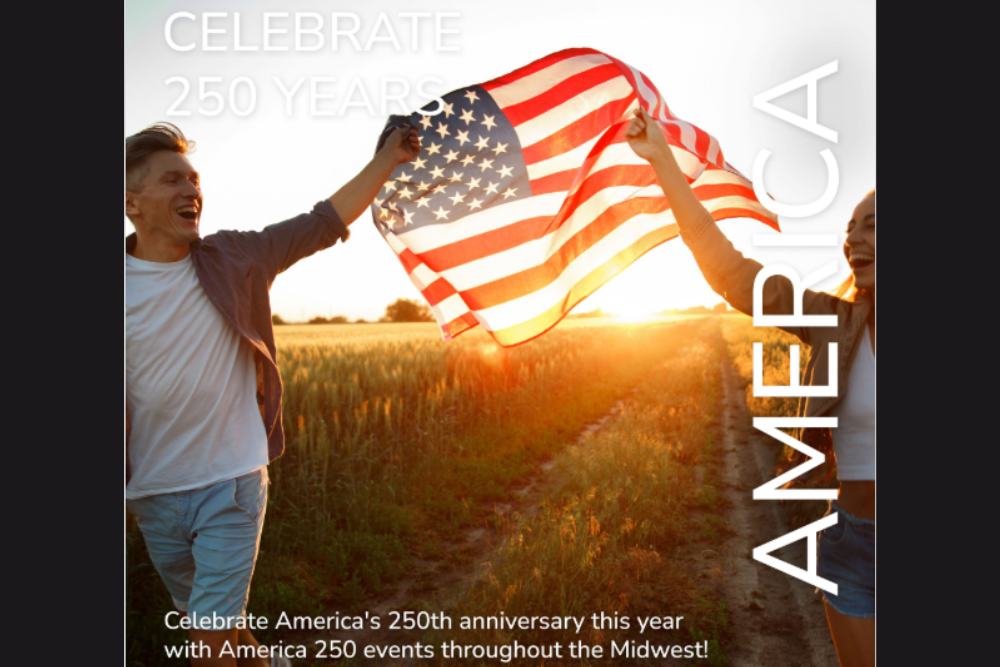
America turns 250 this July, and the country is marking the moment with fireworks, television specials and a debate that cuts to the core of what the nation actually is. The celebrations are real. So is the argument over whose story gets told when the bunting comes down.
The question is not new. Every major American anniversary has forced this reckoning. The centennial in 1876 came a decade after the Civil War, with the historical record already being rewritten to soften what that war was about. The bicentennial in 1976 generated enormous public investment in American history, while critics called out the commercial spectacle surrounding it. Now the semiquincentennial arrives in a country still deeply divided over how to understand itself.
The America 250 fight over history and who tells it
One of the sharpest disputes surrounds the National Park Service. Earlier this year, the agency removed panels at George Washington’s Philadelphia home that named and told the stories of people enslaved there. A federal judge ordered them restored, invoking comparisons to George Orwell’s 1984. An appeals court later overruled that decision.
The removal was not an isolated incident. Leaked government memos describe pressure to revise signs covering Indigenous displacement and the brutality of slavery. References to climate change have disappeared from exhibits. Language describing broken promises to Native peoples has vanished from historic battlefield sites.
Historians argue this pattern matters far beyond any single sign. When official institutions shape what Americans see and learn about their past, those decisions carry weight. Sanitizing that record does not make the difficult parts disappear. It makes the country less equipped to understand where it came from.
View this post on Instagram
Who the real American founders were
Scholars have spent decades broadening the definition of who built this country. The 56 men who signed the Declaration in Philadelphia in 1776 represent one layer of the founding. Beneath and around them were thousands of others whose names are not on the document but whose labor and sacrifice shaped its meaning.
Robert Hemmings, an enslaved teenager who served as Thomas Jefferson’s personal valet, would have been nearby when Jefferson drafted the Declaration. Lemuel Haynes, a Black veteran of the Revolutionary War, spent years demanding that the new nation live up to its own words. Elizabeth Freeman used Massachusetts courts to secure her legal personhood. Countless women washed, fed and cared for the Continental Army. Native nations used the language of the Declaration to argue for their own sovereignty, even as the country moved to take their land.
Historians at Monticello and other institutions argue that understanding the founding requires holding all of these figures in view at once. Choosing between Washington and Lee, between the signers and the soldiers, between the men on the currency and the people who made their work possible, produces a portrait that fits no one’s actual history.
How Hollywood and media are marking America 250
Across television and entertainment, the anniversary is generating significant programming. ABC, Disney Plus, Hulu, National Geographic, FX and ESPN are presenting a 24-hour cross-platform broadcast on July 3 and 4, anchored by David Muir and spanning all 50 states. CBS is airing a three-hour live primetime special hosted by Tony Dokoupil and Nischelle Turner, culminating in what organizers describe as the largest fireworks display in American history over Washington.
A concert at the Los Angeles Memorial Coliseum on July 4 will feature Chris Stapleton and The Smashing Pumpkins, hosted by Queen Latifah. Fox News Channel, NBC, Telemundo, NewsNation and ESPN all have dedicated programming. Disneyland and Walt Disney World are running themed events through the holiday. TIME magazine published a special semiquincentennial issue examining the art, innovations and places that have shaped American life.
The breadth of the celebration reflects something real about the country. Across political lines, most Americans feel the weight of 250 years. What they disagree on is how honestly to carry it.
SOURCES: Time Magazine, The Revelator
About the Author