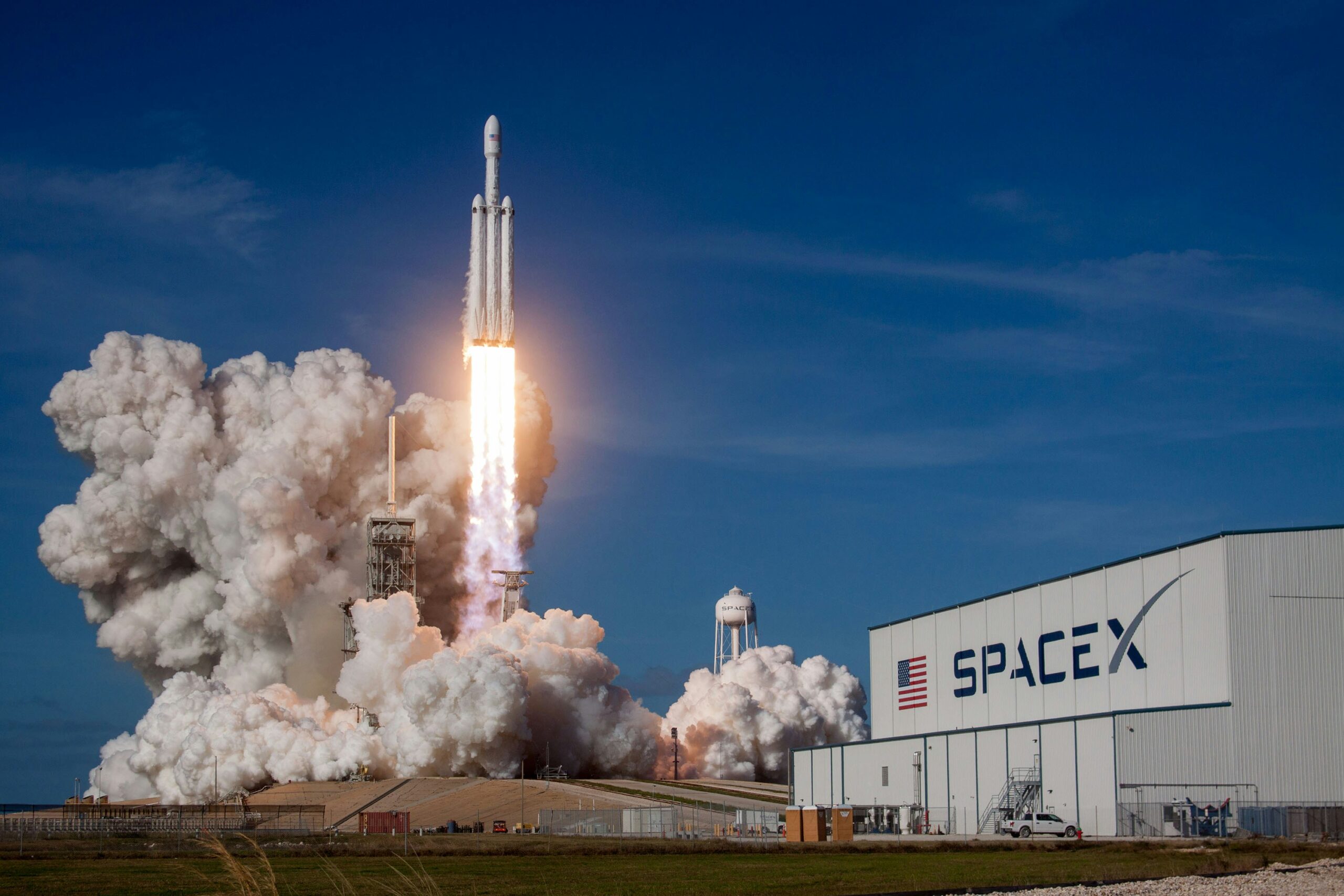
Courtesy: Photo by SpaceX on Unsplash
The rocket and satellite company opens its offering to the public ahead of a historic Nasdaq debut next week
SpaceX has officially launched a retail investor website for its upcoming IPO. The site, spacexipo.com, went live Thursday morning. It includes a prospectus, an investor Q&A, and a full roadshow presentation. Meanwhile, the company’s roadshow with large institutional investors also kicked off the same day. Together, these moves signal that the SpaceX IPO retail investors have been waiting for is now within reach and could become the largest public offering in history.
A record-breaking offering takes shape
SpaceX confirmed it plans to price the offering on June 11, with trading set to begin on June 12. Additionally, the all-primary offering will trade on Nasdaq under the ticker SPCX.
In a filing, the company said it would offer 555,555,555 shares at $135 each, raising $75 billion. That amounts to just 4.2% of the entire float. As a result, the remaining 95.8% stays held by CEO Elon Musk and other insiders. If underwriters exercise the option to sell additional shares, the total raised could climb to $85.7 billion.
At that share price, SpaceX would carry a hypothetical market cap of around $1.785 trillion. For comparison, the current U.S. IPO record belongs to Alibaba, which raised $22 billion back in 2014.
How retail investors can get in
SpaceX says it plans to offer individual retail investors the chance to buy shares through five trading platforms: 1. Schwab, 2. Fidelity, 3. Robinhood, 4. SoFi, and 5. E*Trade. That broad access is somewhat unusual for an offering of this scale. Still, experts urge caution.
Retail investors may not be able to buy all the shares they want. Furthermore, the investment may not be the right move for everyone. Companies that have gone public with at least $1 billion in prior-year sales have, on average, kept pace with the market in the three years following their debut. Smaller companies, by contrast, have tended to underperform. SpaceX has revenue projected to reach $20 billion in 2026, putting it firmly in the stronger-performing category.
What SpaceX plans to do with the money
SpaceX outlined several priorities for the IPO proceeds. First, the company plans to expand its AI computing infrastructure. Second, it aims to enhance launch systems and vehicles. Third, it intends to scale its satellite constellations. In addition, SpaceX needs to repay part of a $20 billion bridge loan within six months, using a portion of the funds alongside additional debt.
Beyond those goals, the offering supports a broader strategic vision. Tesla and SpaceX recently announced Terafab, a joint venture aimed at consolidating every stage of semiconductor production under one roof. Specifically, Terafab targets two chip types. The first is an edge-inference processor built for Tesla’s full self-driving systems, Optimus humanoid robots, and Robotaxi fleets. The second is a high-power variant engineered for space environments, supporting SpaceX satellites, orbital data centers, and xAI operations.
Starlink and the path to a trillion-dollar milestone
A central part of SpaceX’s valuation story is Starlink, its satellite-based internet service. So far, Starlink has surpassed 10 million subscribers. Moreover, its revenue is projected to reach $20 billion in 2026, driven by subscriptions and rocket launches. The service generates the majority of SpaceX’s profits and remains a core reason why this IPO moment is seen as well-timed.
After the offering closes, Musk will hold approximately 82.4% of the voting power of the company’s common stock. Should the $135 share price hold through the Nasdaq debut, it could push SpaceX’s valuation past $1.6 trillion. That, analysts say, is the threshold Musk would need to cross to become the world’s first trillionaire.
Notably, Wedbush analyst Dan Ives described the listing as the first major test for public markets after years of muted IPO activity. He also suggested SpaceX could be paving the way for AI giants Anthropic and OpenAI to follow soon after.
Source: Yahoo Finance
About the Author