Courtesy: Times Now
Venezuela hit by its worst earthquake in over a century as death toll climbs to 164
Two powerful earthquakes struck Venezuela just 39 seconds apart on Wednesday evening, killing at least 164 people, injuring hundreds more and leaving thousands in a state of terror and confusion. The twin quakes, measuring 7.2 and 7.5 in magnitude, represent the worst seismic event to hit the country in more than a century. Rescue teams worked frantically through the night searching for survivors buried beneath collapsed buildings.
Venezuelan President Delcy Rodríguez declared a state of emergency and called on medical professionals across the country to report to their posts immediately. Hundreds of people remain missing, and the full scale of the destruction was still not clear as of early Thursday morning.
What happened and where
The first earthquake, measuring 7.2, struck just after 6 p.m. local time near San Felipe, a city of approximately 220,000 people in the state of Yaracuy, west of the capital Caracas. Less than a minute later, a second and more powerful 7.5-magnitude quake followed. According to the U.S. Geological Survey, that second quake is the largest to hit Venezuela since 1900. The USGS described the 7.2 quake as a foreshock and the 7.5 as the main shock.
The epicenters near San Felipe sent violent tremors rippling through Caracas and surrounding regions. Dozens of buildings collapsed. Others tilted dangerously. In the coastal state of La Guaira, north of Caracas, a hotel was reduced to rubble. The Simón Bolívar International Airport, which serves the capital, sustained heavy damage and was immediately closed. American Airlines suspended its 2 daily flights between Miami and Caracas as a result.
In Caracas, subway and train services were suspended. Power outages darkened entire neighborhoods. Burst water pipes flooded streets. Internet connectivity dropped from over 90% to around 65%, according to network monitoring group NetBlocks.
Scenes of terror from survivors
Residents across the affected region described the moments the quakes struck in harrowing terms. In San Felipe, near the epicenter, a 24-year-old woman described a shaking that lasted between 60 and 90 seconds. Her daughter screamed. The back of their house collapsed. The family was left without power or internet and could not return inside.
In Valencia, west of Caracas, residents described running into the streets in panic. One woman said she tried to run but could not keep her footing as the ground continued to move beneath her. Another described her car rocking so violently from the tremors that driving was impossible. A 68-year-old homemaker in Valencia said she and her family held each other and prayed as windows slammed open and shut and everything around them creaked and groaned.
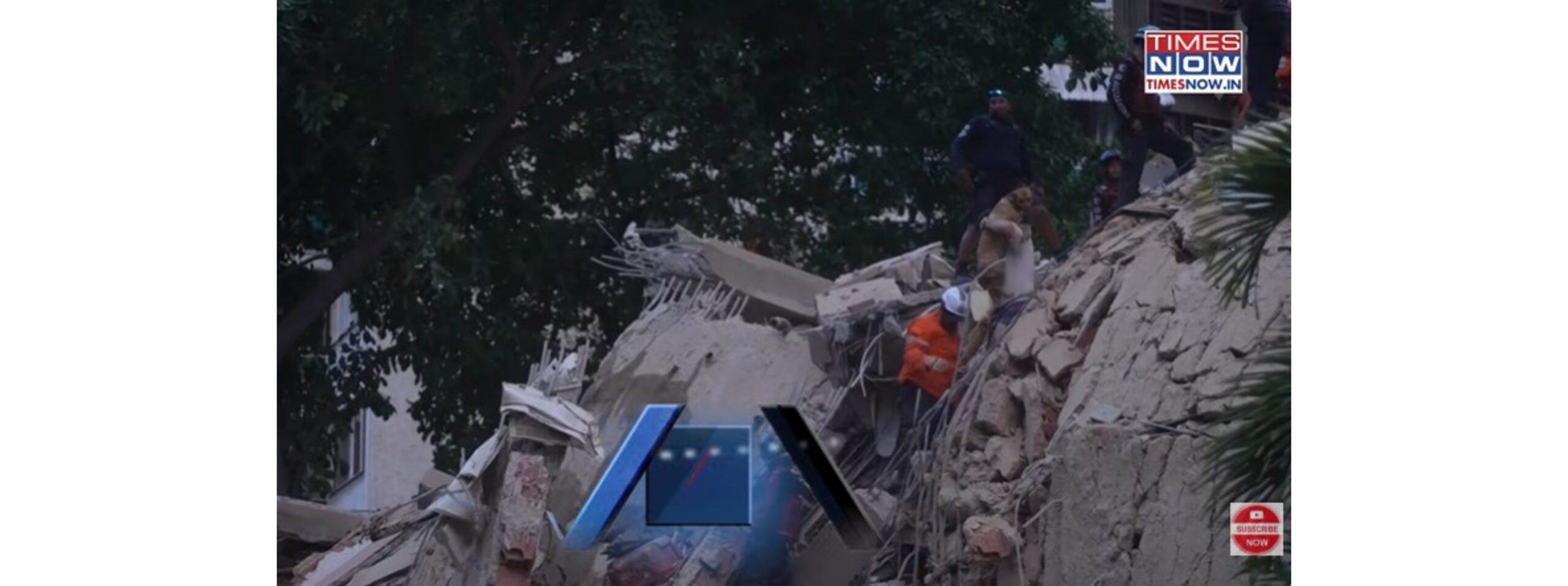
In Caracas, a six-story residential building in the neighborhood of El Paraíso collapsed entirely. Rescue workers climbed through the rubble calling out names of missing residents and ordering onlookers to stay silent so that anyone trapped could be heard. A young girl and a dog were pulled from the debris. In the Chacao neighborhood, at least 11 people died in a single collapsed building.
A country already under enormous strain
The earthquakes struck Venezuela on a national holiday marking an 1821 battle that led to the country’s independence from Spain. Schools were closed and many people were at home when the quakes hit.
The timing adds to the burden facing a country already dealing with severe political and economic upheaval. In January 2026, U.S. forces deposed former leader Nicolás Maduro and took him to the United States. Since then, the Trump administration has taken significant control of Venezuela’s oil industry. The country’s health infrastructure has been weakened by years of resource constraints, complicating rescue and medical response efforts.
Venezuela sits between the South American and Caribbean tectonic plates, making seismic activity relatively common. The last comparable earthquake struck on August 21, 2018, when a 7.3-magnitude quake hit the country. Wednesday’s disaster drew immediate comparisons to a 1967 earthquake that killed more than 200 people in Caracas.
The world responds
International assistance began mobilizing almost immediately. President Trump posted on social media Wednesday night that he had instructed all government agencies to prepare to move quickly. By early Thursday, Secretary of State Marco Rubio confirmed that search and rescue teams, medical resources and humanitarian assistance were already being deployed.
France announced it was sending 85 search and rescue workers. Germany said it had up to 6 military transport aircraft ready to deploy as soon as assistance was formally requested. El Salvador said 300 rescue workers and paramedics were ready to depart with equipment and medical supplies. The Dominican Republic, Mexico, Chile, Argentina, Panama, Spain, India, China, Brazil and several Caribbean nations all offered support as well.
The nonprofit World Central Kitchen, founded by chef José Andrés, committed $1 million to relief efforts. Italy called on the European Union to activate its civil protection coordination mechanism.
Additionally, the U.S. Geological Survey estimated there is a 94% chance of at least one aftershock measuring 5.0 or greater in the coming week. Two smaller aftershocks measuring 4.5 and 4.4 had already been recorded near Caracas by early Thursday morning.
Source: The New York Times
About the Author