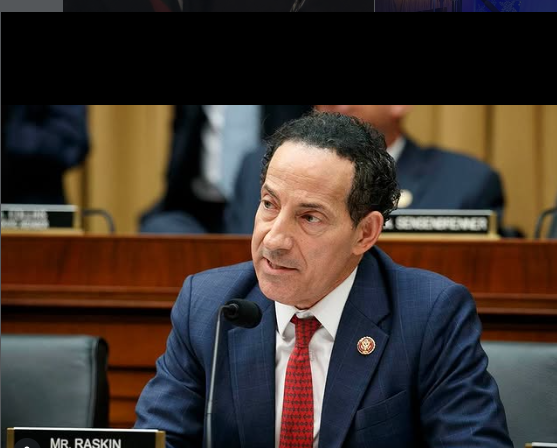
Courtesy:jamie raskin
Courtesy:jamie raskin
House Democrats are raising serious concerns about how the Justice Department handled documents related to Jeffrey Epstein. The controversy stems from redactions that lawmakers describe as confusing, inconsistent, and in some cases, potentially harmful.
The unredacted files were reviewed by ranking House Judiciary member Jamie Raskin at a government facility in Washington, D.C., where lawmakers can access sensitive records without electronic devices or staff assistance. The review came after the public release of millions of documents mandated under the Epstein Files Transparency Act, passed by Congress in November.
The act allows the Justice Department to redact certain details to protect the privacy of Epstein’s victims, but multiple publicly released documents included identifying information, sparking criticism from lawmakers and advocates.
Unusual redactions and omissions
Raskin reported discovering redactions that appeared unnecessary, often obscuring the names of prominent figures linked to Epstein while leaving victim identities exposed. Among the redacted names was Les Wexner, the founder of Victoria’s Secret, whose ties to Epstein are widely known.
The discrepancies have raised concerns about whether the redaction process was executed competently or deliberately to protect certain individuals while failing to safeguard victims. Lawmakers described the inconsistencies as creating confusion and limiting the ability to fully understand Epstein’s network of contacts.
Victims’ identities exposed
The release of files has unintentionally exposed some victims, undermining the purpose of the transparency act. Experts and advocates warn that this exposure could intimidate other survivors from coming forward. Documents reviewed by lawmakers revealed personal information that should have remained confidential, highlighting lapses in protocol.
Connections to high-profile figures
Several files reference interactions with public figures, including former President Donald Trump. One email detailed a conversation involving Trump’s legal team in 2009, providing context for his past interactions with Epstein. While the files contain sensitive information, lawmakers emphasize that the public release should balance transparency with protecting victims’ privacy.
Ongoing oversight and congressional action
The review has prompted further congressional scrutiny. Lawmakers plan to question Attorney General Pam Bondi about the redaction process during upcoming hearings. Congress is seeking assurances that remaining files, numbering in the millions, will be released responsibly and accurately.
Raskin emphasized the need for immediate action to ensure transparency while protecting survivors. The goal is to address flaws in the process and maintain public trust in the release of these sensitive documents.
Broader implications and international attention
The controversy over Epstein file redactions has not been limited to the United States. Lawmakers noted that similar revelations have triggered political scrutiny abroad, including in the United Kingdom. Experts warn that mishandling sensitive information can erode public confidence in both the justice system and government oversight.
The Epstein files continue to shed light on the financier’s network of associates and alleged criminal activity. Lawmakers, advocates, and the public are closely monitoring the Justice Department’s actions as further documents are prepared for release.
The Epstein file controversy underscores the challenges of balancing transparency, accountability, and the protection of victims’ identities. Lawmakers are pressing the Justice Department to correct mistakes and ensure future releases meet the legal and ethical standards envisioned by Congress.
Source: The Guardian
About the Author