Courtesy; Instagram
Utah issued its first-ever red flag warning Friday morning, a designation the National Weather Service office in Salt Lake City had never applied in its history. The warning covered much of central and southern Utah and reflected what forecasters classified as extreme fire weather conditions. It stayed in effect through at least midnight Saturday. Wind gusts reaching 50 miles per hour and critically low humidity drove the alert. Forecasters warned those conditions would push fires to grow at rates the state has not seen before.
The warning did not arrive in isolation. Multiple large fires were already burning across the state, and conditions were getting worse.
How big Utah’s wildfires have grown
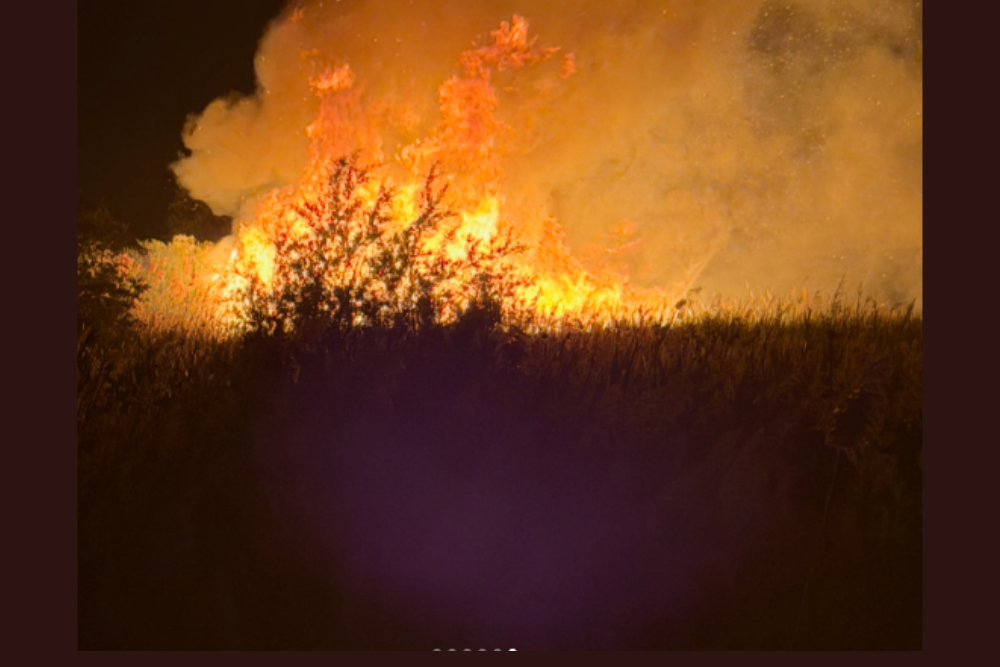
The Cottonwood Fire, burning near the town of Beaver in southwest Utah, had grown to more than 71,000 acres by Thursday. Officials listed it at 0% containment Friday. That single fire had already burned through an area more than twice the size of San Francisco.
The blaze caused damage at Eagle Point ski resort. Assessment teams were still working to determine how many of the hundreds of nearby cabins, trailers and condominiums had been lost. At least one family’s multi-generational cabin burned earlier in the week.
The Iron Fire, which started June 19, stood at roughly 27% containment Friday morning. Additional fires broke out Friday afternoon in Juab County and Millard County. One Juab County fire forced power shutoffs in Eureka and Tintic Junction and closed nearby state roads. A separate fire nearby, possibly started by lightning Thursday night, was growing rapidly and pushed campers and recreational vehicles to evacuate. The Sulphurdale Fire, near a geothermal power plant, also reignited after shifting winds reversed what officials thought was a contained situation.
View this post on Instagram
Power cuts and what is driving the wildfire danger
Rocky Mountain Power cut electricity early Friday in areas around Beaver, Cedar City and Milford. The shutoffs covered Beaver, Garfield, Iron, Millard and Washington counties. Seven additional counties received warnings. As many as 15,000 residents could remain without power through Sunday depending on conditions.
The fire danger this year runs deeper than dry weather. Utah recorded its lowest snowpack ever in 2026. A March heat wave triggered an early runoff that left the landscape unusually dry heading into summer. Together, those factors set up conditions that firefighters and forecasters say have no modern comparison in the state.
The fireworks ban and what wildfire fighters warned
Gov. Spencer Cox signed an executive order Thursday restricting fireworks statewide through July 5. Cities and towns may designate specific areas for fireworks use in consultation with local fire officials. Provo announced a full citywide ban and chose not to designate any permitted area.
At a public meeting Thursday night at Beaver High School, firefighters told residents that some of the hardest days of battling the Cottonwood Fire may still be ahead. The incident meteorologist assigned to the fire said Friday’s forecast marked a critical weather event. That warning came after two days of slightly improved conditions had briefly raised hopes the situation was stabilizing. Those hopes did not hold.
About the Author